

An Important Note for Mobile Users:
To view the complete course navigation panel, please rotate your device to landscape mode.
📖 Course Navigation
1) Introduction
2) Understanding the Deal
3) Passive Investor Due-Diligence
Part 1: People
Part 1: People
4) Passive Investor Due-Diligence
Part 2: Numbers
Part 2: Numbers
5) Limited Partner Due-Diligence
6) Syndication Documents
7) Other Investment Options that are Syndicated
8) Formulating Your Investor Philosophy & Building a Network
9) Venture Capital & Angel Investing
[UNDER CONSTRUCTION]
[UNDER CONSTRUCTION]
BONUS 1 – Syndicator Lies from Real Deals
BONUS 2 – Secrets of Syndication Video Series
BONUS 3 – Understanding Development (Heavy Value-Add)
BONUS 4 – Property Tour Videos
RESOURCE – Syndication Due-Diligence Scorecard & Checklist
The Wealth Elevator Syndication eCourse
Syndication Due-Diligence for (LPs) Passive Investors
Course Homepage | 2) Understanding the Deal | 2.2 Market Selection

INVESTOR EDUCATION
Evaluating a Market
In case you haven’t had experience with real estate investing and went straight to real estate syndication, here’s a quick overview of evaluating market potential taken from our Remote Rental eCourse. Owning rental properties is not a prerequisite to investing in a real estate syndication, but it does help educate passive investors at spotting sucker deals because they have some real world experience or context to rely on.
It is up to you as the passive investors to do the upfront due diligence to make an informed decision when a deal sponsor is using market trends and mentions in their business plan that they are investing in “The #1 fastest growing city.”
Use the city data website to help you find the real estate market data below.
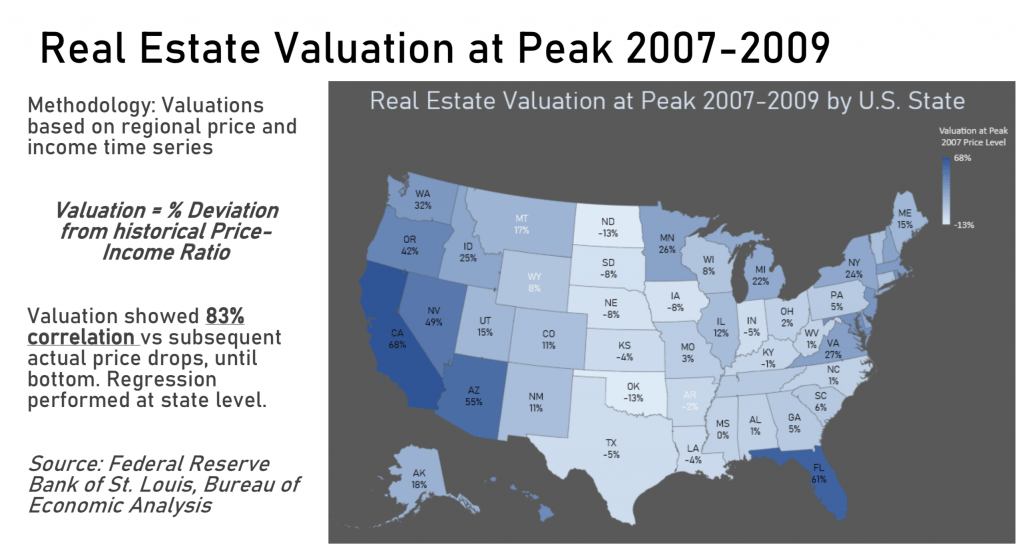
San Francisco, Hawaii, Los Angeles, Seattle, Boston are examples of primary markets which are NOT ideal for passive income cash flow investing.
The syndicated real estate deal could appreciate to increase the equity multiple but I consider that gambling. Sophisticated investors invest in cash flow where the rents exceed the mortgage plus expenses (and enough money to pay for professional property management to do our dirty work). A lot of this concept is explained in the Keynesian Beauty Contest theory, where only the top competitors get the most notoriety but the best real estate syndication deal picks are hidden in the field. So part of the game is staying away from the “dumb” amateur money.
A good passive investor takes a look at the Rent-to-Value Ratio and looks for at least 1% or more to be able to cash flow after expenses. You find the Rent-to-Value Ratio by taking the monthly rent and dividing it by the purchase price. For example, a $100,000 home that rents for 1,000 a month would have a Rent-to-Value Ratio of 1%. Most people I work with live in primary markets (as opposed to Birmingham, Atlanta, Indianapolis, Kansas City, Memphis, Little Rock, Jacksonville, Ohio, or other secondary or tertiary markets) where the Rent-to-Value Ratios are under 1%. Plus we invest in red states so we have good landlord laws on our side too.

Neighborhoods
- Household income
- Is the average household income between $40k-$70k? Note this can range based on your strategy such as B or A class Apartments or mobile home parks.
- Below $40k – there will be an increase in delinquencies
- Above $70k – there will be a lower cap rate (more on cap rates in the next module)
- Is the average household income between $40k-$70k? Note this can range based on your strategy such as B or A class Apartments or mobile home parks.
- Poverty Level
- Be wary of investing in neighborhoods lower than 20%.
- Unemployment Rate (Google this)
- Make sure this is not above 2% higher than the city’s unemployment rate.
- Demographic Diversity
- You want to have at least two ethnicities in the neighborhood

Cities
- Population Growth
- Has the city’s population gone up at least 20% since the year 2000?
- Examples: Phoenix, Las Vegas, etc.
- Has the city’s population gone up at least 20% since the year 2000?
- Income Growth (you can also use bestplaces.net)
- Is there a 30% income growth since the year 2000?
- This means that the city is keeping up with inflation.
- Is there a 30% income growth since the year 2000?
- Median House Value
- Is there a 40% increase in median house or condo value since the year 2000?
- Crime
- Were there less than 500 crimes last year? (Make sure this number goes down).
Conclusion and Key Takeaways
Market Selection is Key to Investment Success – Passive investors should focus on emerging markets with strong population and income growth, rather than relying on speculation in primary markets like San Francisco, Los Angeles, or Boston.
Rent-to-Value Ratio Determines Cash Flow Potential – A rent-to-value (RTV) ratio of at least 1% is ideal for ensuring positive cash flow after expenses. A sophisticated investor will avoid low RTV markets where rents don’t sufficiently exceed mortgage and operating costs.
Beware of Misleading “Fastest-Growing” Claims – An experienced syndicator may promote a market for a multifamily syndication deal as “the fastest-growing,” but every individual must verify population growth (20%+), income growth (30%+), and home value increases (40%+) to confirm long-term viability.
Neighborhood-Level Due Diligence Matters – Every real estate investor should analyze specific neighborhood data, not just city or state-level trends. Key metrics include household income ($40K-$70K), poverty rates (<20%), and unemployment rates (not exceeding the city’s rate by more than 2%).
Invest in Landlord-Friendly States – Markets in red states tend to have stronger landlord protections, reducing the risk of tenant-friendly policies that can impact eviction timelines and rent collection.
Avoid Speculative Investing – Sophisticated investors prioritize cash flow and market conditions over appreciation-based investing, avoiding areas dominated by “dumb amateur money” that chase speculative price gains.