


Numbers in the examples on this page are hypothetical and for illustration only. Return targets are not guarantees, and investors can lose money.
Exiting a Deal – Cap Rates
The following is more of an academic discussion of what a Capitalization rate (“Cap Rate”) is; however, having this background knowledge is critical to understanding an investment opportunity and being able to point out BS sales marketing tactics.
The Cap Rate is an assessment used by a real estate investor to help determine the financial health of an investment.
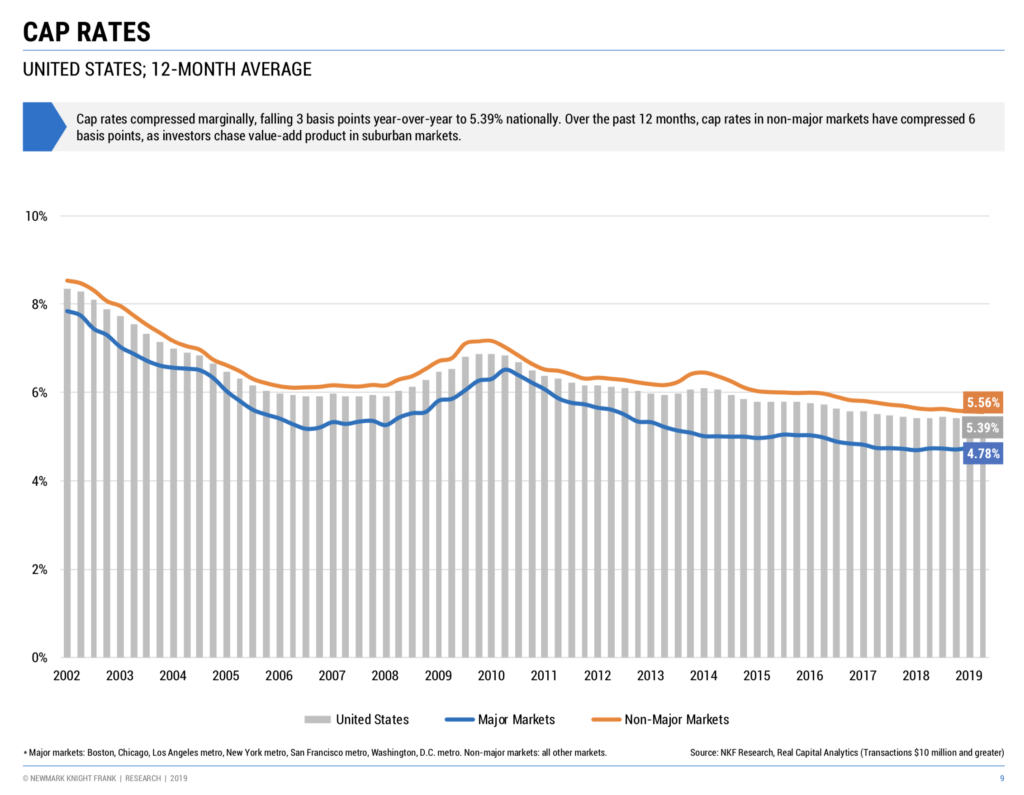
With the current market trends, there has been continual cap rate compression, bringing down the potential return. Despite that, we strongly feel that cash flow investing in recession-resistant assets is a prudent investment strategy rather than having your cash sit on the sidelines as lazy equity.
How to calculate a Property’s Cap Rate
The formula is as follows:
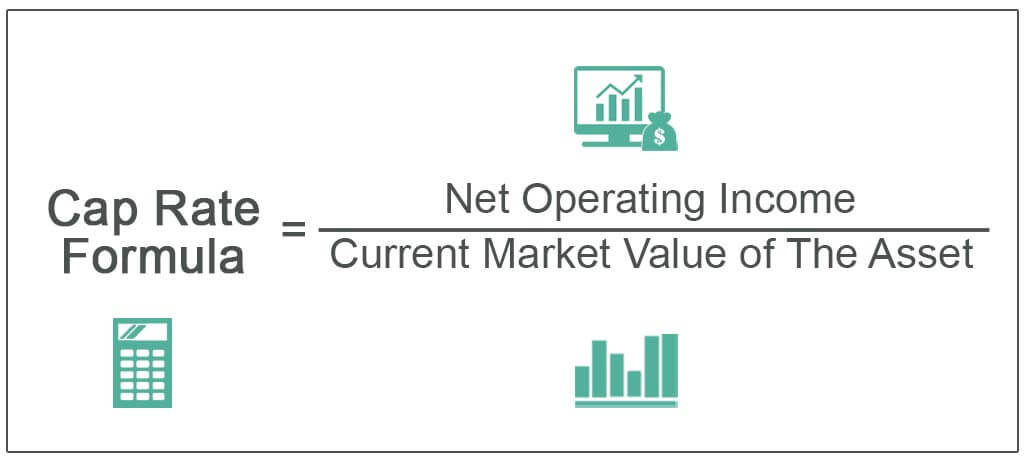
Example: Cap Rate Calculation w/ Financing
- A passive investor puts 25% down for the purchase of an $8.5M property.
- Finances $6,375,000 on a 25-year amortization at 5.05%, which creates an annual debt service of $449,448.00
- The lender’s return on this property investment (known as the mortgage constant) is 7.1% ($449,448 /$6,375,000)
- The NOI to the passive investor after the mortgage would be $276,897, creating an investor’s equity return of 13.0% ($276,897 / $2,125,000 down payment). This is also known as the cash-on-cash return.
When weighted based on the loan-to-value/equity position, the cap rate is verified.
- Loan-to-Value 75% x 7.1% mortgage constant = 5.3% lender’s cap rate
- Equity Position at 25% x 13.0% cash-on-cash return = 3.2% investor’s cap rate
- Capitalization Rate (5.3% + 3.2%) = 8.5%
This splitting of the cap rate into the lender’s cap rate and the investor’s cap rate is called the Band of Investment Method. It can be used to back into a purchase price once the lending terms are set and the investors’ desired ROI is known.
Analyzing Cap Rates for the Best Apartment Type
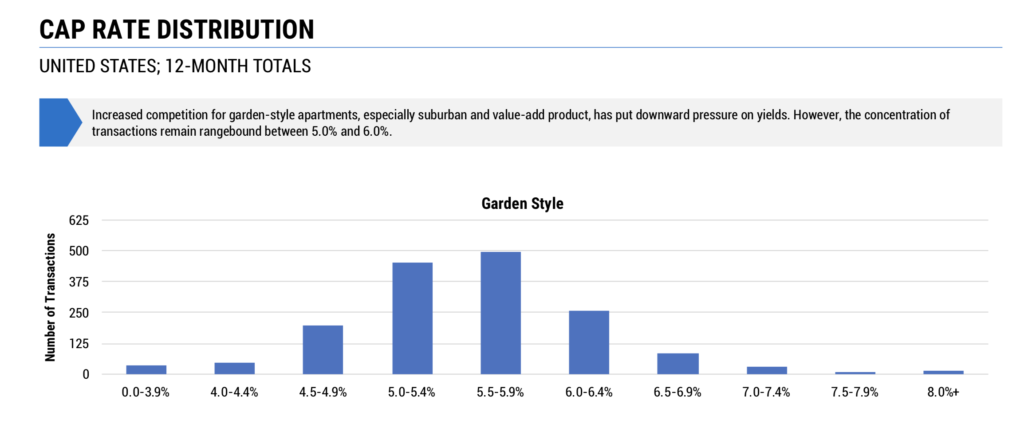
See graphics below for analysis of cap rates in multifamily. Note that these are based on the overall 12-month compressed cap rate.
“Garden-Style” is the 1-3 story Class B or C apartments that many of us like to buy for optimal returns.
What Does the Cap Rate Tell You?

Return on Cash Investment
The cap rate helps an investor determine the percentage of return they can anticipate if they purchased the investment property for cash, assuming the income and market value remain constant

Investment Comparison
It can also be a useful tool to compare different types of investment properties. For example, if an apartment building is listed for $1,250,000 and has an NOI of $92,500, the cap rate would be 7.4%. Whereas if a mobile home park is listed for $435,000 and is generating a NOI of $37,500, the cap rate is 8.6%. The higher the cap rate, the better the return on the investment, making the mobile home park a more appealing option, at least at this point in the analysis.

Risk Assessment
The cap rate has a risk/return buried in the rate. If an investor has $1,000,000 to invest, they could place it all in a 10-year treasury bond and be guaranteed a 3% return on their investment.
If they purchased an apartment building that generates $100,000 annually, they would get a 10% return on their investment. The 7% difference reflects the additional risk associated with managing an apartment building compared to the bond investment.
Fannie Mae has different tiers of markets, which correlate with the caps of the market. Tier 1 markets like San Francisco, New York, Los Angeles… places we would not invest in because there is no cashflow, have the lowest caps (2%-5%). Tertiary markets have higher caps (5%-8%).
What Does the Cap Rate NOT Tell You?

Irregular Income and Expenses
The capitalization rate assumes that the NOI will remain constant. If the property’s net operating income stream is complex, such as with percentage-based rent rates, the cap rate will not be able to provide an accurate picture. The more complex Discounted Cash Flow (DCF) analysis will need to be completed.
Additionally, inaccurate income or expenses will dramatically affect the capitalization rate. So you need to verify the Profit and Loss Statements.

Cash-on-Cash
A cap rate assumes a cash purchase. Financing will affect the investor’s ROI. The cap rate will then need to be split between the return on the lender’s investment and that of the investor.
When is it a good time to buy?
Investors make money on the delta or spread between the cap rate and the interest rate… times the leverage (loan). So as long as there is a spread, the investor makes money. Traditionally, Cap Rates and Interest rates move as a pair. See below, which I found as the best academic example for this.
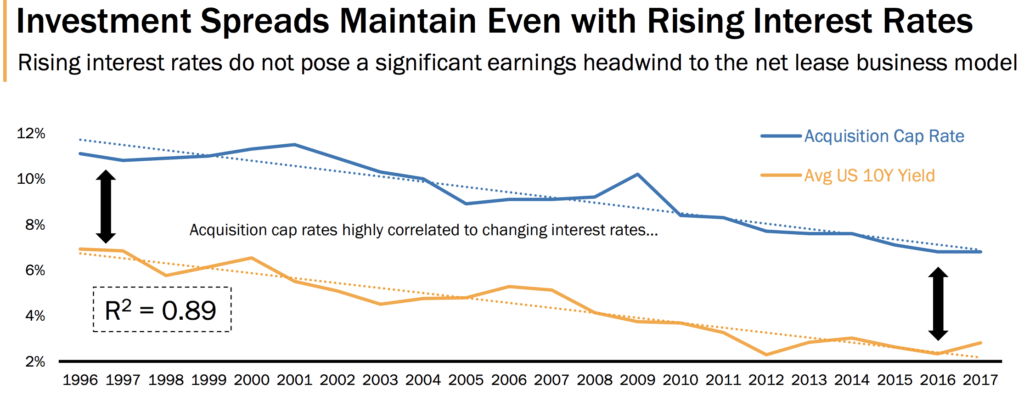
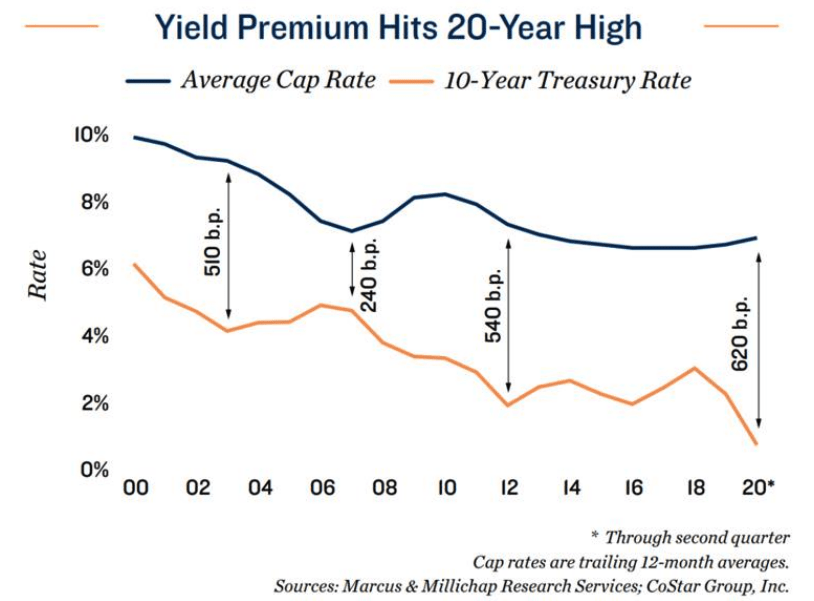
Self Storage Cap Rates vs. Interest Rates
What is the current/prevailing cap rate of a market, so I can compare it with the reversion/exit cap rate? Refer to charts like these. Note – there is a large range based on asset class and sub-market within the MSA.
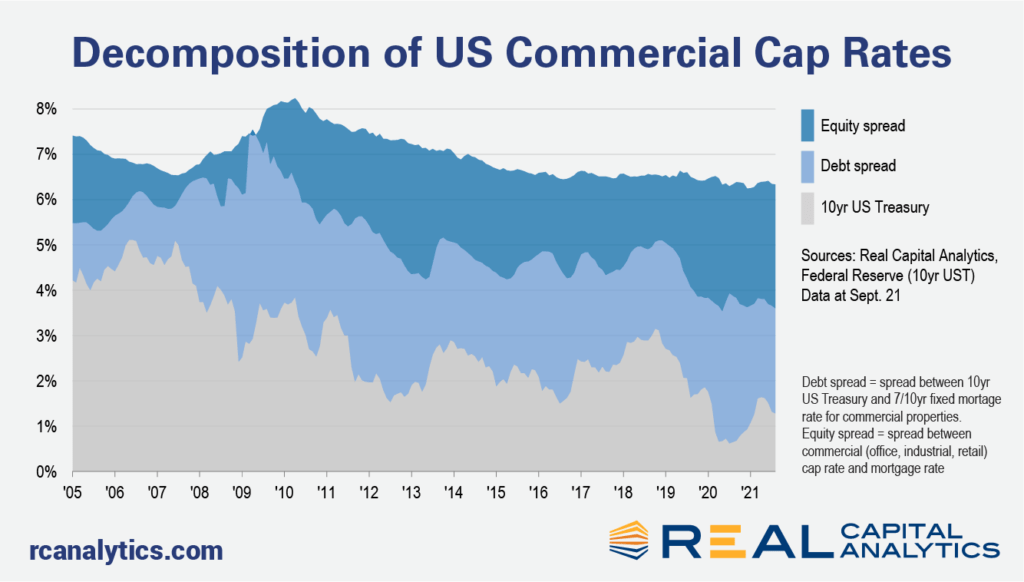
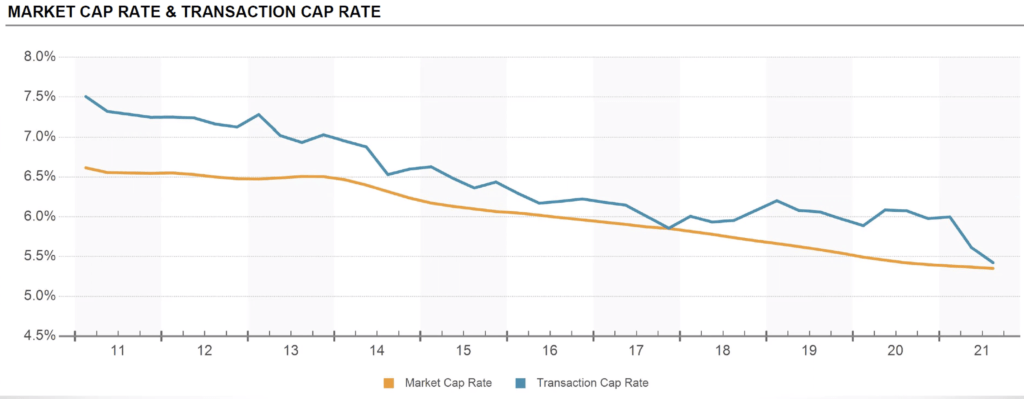
The best time to invest was yesterday!
Talk it through with us
Questions on “Cap Rates” as you look at real deals? Join The Wealth Elevator investor community and bring them to your onboarding call.
Join the club and book your onboarding callJoining is free.

The podcast behind this course
The Wealth Elevator Podcast
Lane's show for accredited investors on passive syndications, taxes and alternative investments. Many of the lessons in this course started as episodes.
Listen on Apple PodcastsWatch on YouTube