


Vetting the General Partner (GP)
The General Partner or GP is the party that puts together and operates the deal. There are a lot of terms out there that pretty much mean the same thing such as sponsor, co-sponsor, lead, syndicator, operator, general partnership, fund manager, or deal sponsor so as we progress we will use these terms interchangeably.
Make note of the 3 P’s: people, process, & performance which we will use as a framework for vetting the general partnership
Documents to be aware of (however it may not be appropriate if you want to follow good LP etiquette, especially as an individual investor under 5-10M net worth):
Audits Since the Inception of the Company
The independent auditor’s report is critically important, as it will reconcile assets, portfolio balances, and performances, and often provide insights on portfolio construction, liquidity of underlying assets, and back-office protocols. (Appropriate for a larger institutional or private equity fund)
Independent Prime Brokerage Report as of Last Completed Audit
This allows us to see more detail on the portfolio from the time of the last audit and allows us to reconcile the audit with the actual portfolio. If anything doesn’t line up with the audit, it only means that either we or the auditor are missing out on some information. (Again, this is appropriate for larger institutional funds or a private equity firm)
Reference List
They will all obviously be glowing references, but the choice of references can be very important. Make note of how the reference is connected to the GP entity.
Note: It may not be appropriate for a limited partner to ask for references. Think about it, the sponsor does not know you and may not want to give up past LP investor information for their privacy. If you are an accredited investor with a net worth is over 5-10M then it might be fair game to ask.
Service Provider Contact Information
Make note of the service provider (e.g., property management, third-party accounting firm, syndication lawyer), and perform due diligence on the service providers to get an understanding of the terms and length of the relationship. If you could see the same names come up again and again in different deals, then this is a good sign.
Internal Risk Reports
This gives us a sense of how the sponsor measures risk, what risks they control for, and how they fall within those parameters. (Appropriate for larger institutional funds)
Regulatory Registration Documents Such as Form ADV for Advisers
This is more confirmatory information, but can also show critical pieces of information such as assets under management as of a particular date, key principals, number and type of clients, and compliance with the law. (Appropriate for larger institutional funds)
Investor Letters
This gives us a sense of the quality of communication, investment ideas, research, and insight into the manager’s personality and approach. Investor reports need to keep investors abreast of the happenings of the project but there is a fine line in giving too much information.
Do you tell your boss every little issue you are working through throughout your day?
Spend Some Time on The Sponsor’s Website
A deal-maker’s site should be clean and well-designed, contain quality information, and be easy to navigate. You should, for example, be able to quickly locate the photos and bios of team members. The bios should be complete and updated detailing their experience with the projects.

In short: the site should evoke professionalism and reflect the quality of the deal sponsor and his or her team. You should get a sense of their level of commitment to excellence and to the success of their investors. Remember, we are looking for exceptions that stick out.
Now, yes, I realize that websites can be deceptive and manipulative and can whitewash some very bad companies to the point where they look awesome. (think Theranos and Bernie Madoff, etc.). However, when you insert the art of reviewing websites into the rest of the protocol, you’ll see that doing so will give you some useful information.
Review Their Marketing Material
Similar to your review of the sponsor’s website, make sure you use the same process to review their marketing material before you make your investment decision, whether it be webinars, podcasts, or even their answers on websites like Quora.
Are they constantly pitching and excluding real information? And when they are asked a question, are they answering it in an insightful manner, or are they evading it like a politician?

Post 2019: It seems like everyone has a podcast and can create a fake celebrity status!
Here are two examples of podcasters who built up a fan base, but used their power incorrectly.
1) Clayton Morris – Class D Turnkey Rentals
2) The Income Store Ponzi Scheme

Quick List of Red Flags:
- The sponsor does not have any background in business. They might be successful academics or W2 workers but that does not translate to entrepreneurs. That said, a college education is not everything but it does show that an individual did stick around at least four years to accomplish a goal. I like to work with professionals and have at least a college education when picking partners – a fire-breathing entrepreneur only gets you so far.
- Do they have a flawless or litigation-free past? Beware of clean pasts! We want to see how they handled problems and made it through. It’s not possible to have a flawless record.
- They are not professionals in the definition of the word where they are full-time. And this is on the side of an IT job or engineering gig. I’m all for people going after their dreams but not with my money.
- Is this a team of good digital marketers appearing to be institutional operators?
- What is their net worth? I never liked anyone who was not over $1M net worth. This is why I never liked doing BRRRs (check out the full discussion here) because primarily the folks you would work with are lower net worth team members who would be tempted to steal money because it’s worth a lot to them.
Conclusion and Key Takeaways
Vet the People, Not Just the Pro Forma – People, Process, Performance Are Key – Numbers don’t lie, but people do. The sponsor’s track record, professionalism, and integrity matter just as much as deal assumptions. Always start with the operator.
The GP Goes by Many Names – But You Still Need to Know Who’s in Control – Whether they’re called the sponsor, syndicator, or operator, the GP is ultimately responsible for the deal’s execution. Know who’s steering the ship and how much decision-making authority they hold.
Look Beyond the Hype – Professionalism Can’t Be Faked – A polished website and slick marketing don’t prove credibility. Dig deeper. Look for real bios, real team members, and real track records—preferably full-cycle exits with investor references to back them up.
Digital Footprint Tells a Story – Look for Consistency and Authenticity – In today’s world, legitimate operators have an online presence. If you can’t find anything meaningful (or find only fluff), that’s a red flag.
Red Flags Are Often Subtle – Learn to Spot Them Early – Flawless records, side-hustle operators, vague credentials, and team members with no business background should make you pause. A little dirt is normal—how they handled it matters more.
Don’t Trust the Podcast Persona – Ask Who’s Actually Investing with Them – Influence metrics and podcast followers don’t equal competence. Ask your peers: “Has anyone in your circle gone full cycle with this sponsor?” If not, it’s too early to trust.
Service Providers Tell You a Lot – Repetition = Reliability – Operators who work with the same property managers, attorneys, and accountants across deals often have better systems and deeper relationships—both signs of a professional shop.
Investor Communication Reflects Sponsor Culture – Are They Transparent or Evasive? – Review past investor letters or reports. Clear, proactive communication (without oversharing or sugarcoating) shows maturity and readiness to handle the unexpected.
Institutions Review Ops First – You Should Too – While sponsors love to pitch the sexy returns, good limited partners evaluate the boring stuff: audit trails, admin procedures, cash controls, and how risks are actually managed behind the scenes.
Don’t Be the First Check – Let Friends, Family, and Fools Go First – Before wiring funds, confirm the sponsor has already made others money. If you’re the first investor, understand that you’re also the test subject.
Invest Smarter, Avoid Costly Mistakes,
and Gain the Edge of a Master Investor

Lane Kawaoka
My FOOM clients bring me deals all the time and my response is always the same, “do you know these guys personally or have you or someone in your inner circle actually invested with them before and went full cycle?”
Most time is through some random sponsor who can’t raise their own money on some crowdfunding website or some random cold email pitch and then I say, “No thank you, let me know how it goes.”
Collector of 85+ Annual K1s aka Passive Investments through 2021, but more importantly operating partner of over 2B in assets and dozens of different partnership sets – so I really know what happens out there!
People First
We tend to put a lot of emphasis on the numbers and checking of deal assumptions like reversion cap rates, full occupancy assumptions, and annual rent escalators because numbers do not lie. People do!
But in the larger picture, who you invest with is half of your due diligence. We will get to the numbers in the next module.
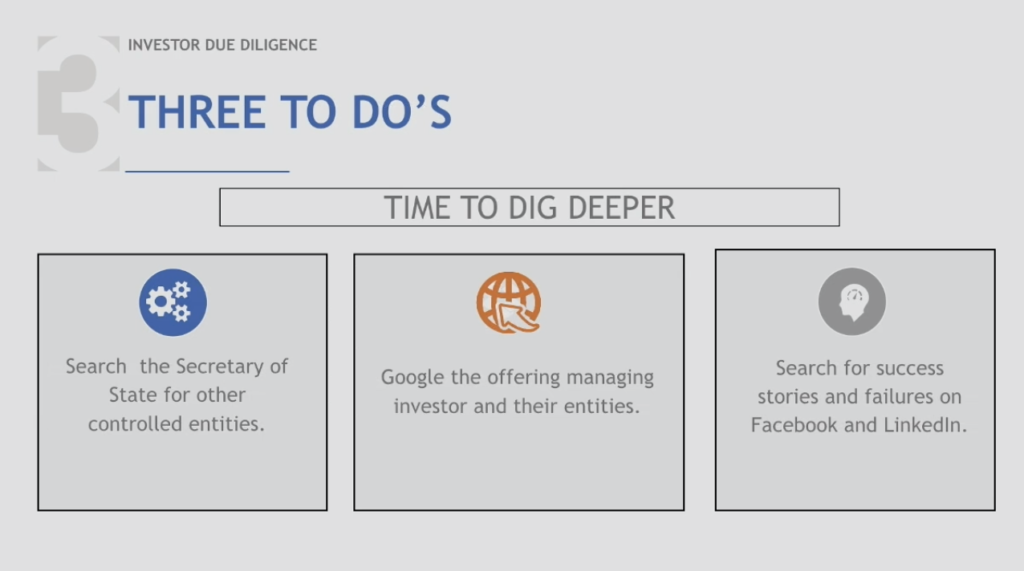
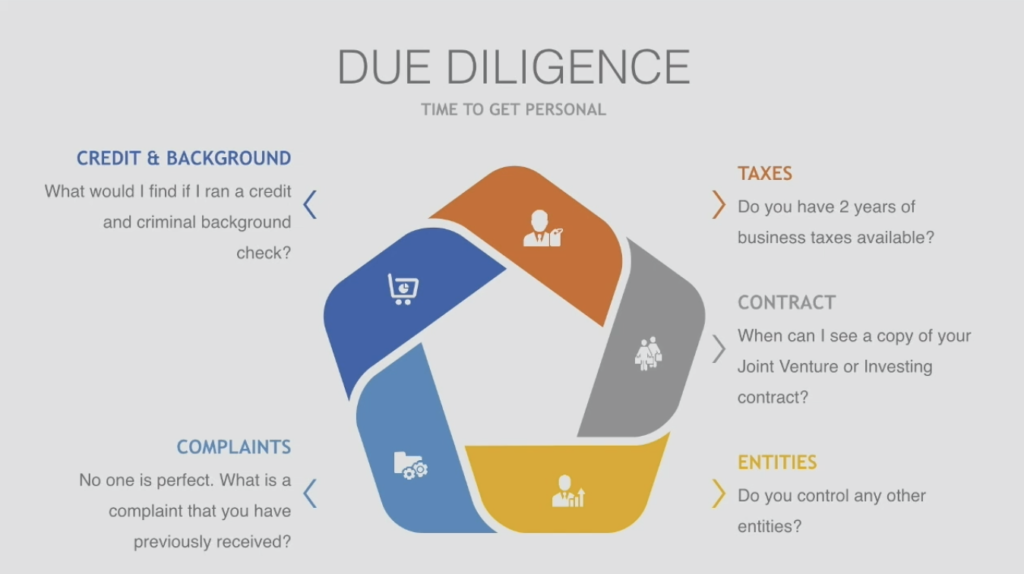
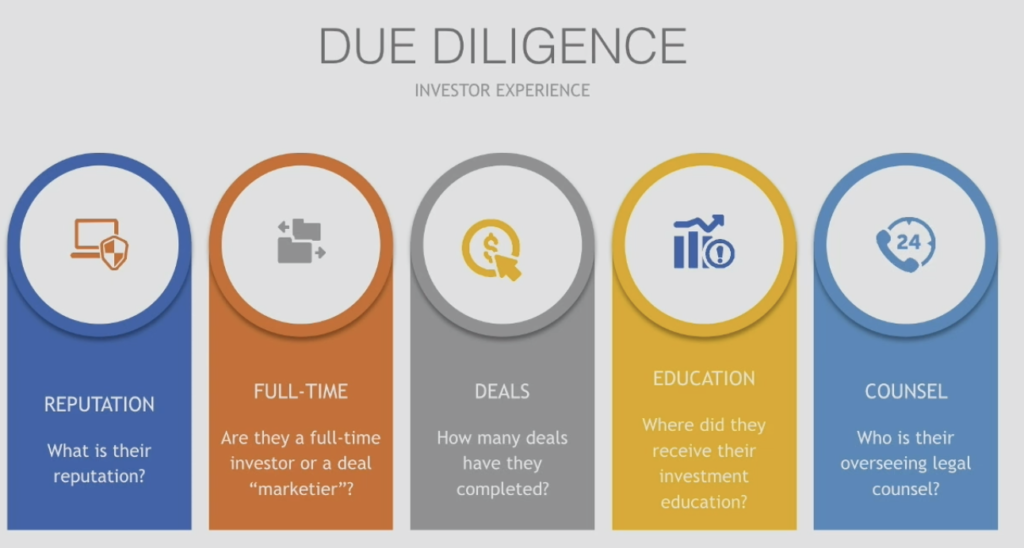
Below are some steps to perform due diligence on who you are investing with. Note: Some steps apply beyond passive investor LP syndication due diligence for an investment into something like a 300-unit syndication deal. For example, it may apply as well to situations where you would like to perform due diligence in order to invest with the operator as a general partner in the deal, or if you are considering a single-family home debt investment (e.g., performing notes).
This is educational content, not tax, legal, or investment advice. We are not attorneys, CPAs, or financial planners. Please let us know if you need a referral to a 💼 CPA, ⚖️ Lawyer, or other vendor here.
Talk it through with us
Questions on “The Vetting Process” as you look at real deals? Join The Wealth Elevator investor community and bring them to your onboarding call.
Join the club and book your onboarding callJoining is free.

The podcast behind this course
The Wealth Elevator Podcast
Lane's show for accredited investors on passive syndications, taxes and alternative investments. Many of the lessons in this course started as episodes.
Listen on Apple PodcastsWatch on YouTube