


The Wealth Elevator

An Important Note for Mobile Users:

To view the complete course navigation panel, please rotate your device to landscape mode.

📖 Course Navigation
The Wealth Elevator Podcast cover art

The podcast behind this course

Apple Podcasts · YouTube

Join the club

The Wealth Elevator Syndication eCourse

Syndication Due-Diligence for (LPs) Passive Investors

Course Homepage | 6) Syndication Documents | 6.1 Syndication PPMs

INVESTOR EDUCATION

Syndication Investment Process

Signing of the PPM (electronic or physical) and the order of wiring funds are done in different orders. Sometimes investors will wire the funds first, then be confirmed in the real estate syndication deal, and sometimes it’s the other way around. 

Frankly, the closing of the asset with the Bank and the seller is the priority. Linking dozens and dozens of investors’ $50,000-100,000 wires and signing the investor syndication PPMs is another task that has to be completed in parallel.

Below is an example timeline of the syndication investment process.

Understanding a Syndication Deal (PPM)

A Private Placement Memorandum, or PPM, is a legal document that provides detailed information that discloses everything a potential investor needs to make an informed decision to provide funding. This is going to be your “go-to” legal document for everything as it traces and depicts the provisions of a syndication opportunity and incorporates the task subtleties, potential contributors, course of events, expected rate of profitability, legal disclosures, and likely risks.

These legal documents are required by the SEC when making an offering to the public.

Overall, the PPM documents can cost $10,000-30,000 for one real estate syndication deal.

It’s important that your deal has a PPM; make sure it’s coherent, professionally put together, and free of false information. I have yet to see one PPM without a few immaterial typos. Most lawyers use a cookie-cutter PPM format and slightly alter sections depending on deal specifics and payout structure.

The SEC says the lack of a PPM is one of the top 10 red flags that you’re being scammed.  If the documents don’t even pass this initial smell test, it’s time to move to the next opportunity.

PPM Outside Structure: The Regulatory Side Of A Deal

When reading through a PPM, you will see the following sections:

  • Summary of the Offering
  • How to Review the Offering
  • Investor Suitability Standards
  • Regulations and Investor Qualifications
  • Summary of the Company

To properly understand the deal, you need to go through them all.

Understand that all PPMs are different, so this is a high-level overview of how most PPMs are organized.

Summary of the Offering (Executive Summary)

This is your introduction to how the syndication company is being structured to manage the investment.

A typical summary offering includes:

  • Photos of the property and area
  • Overview of the submarket
  • Liquidity (for multifamily syndications, one drawback is limited liquidity; you should plan on keeping your money in the investment for the entire hold period)
  • Summary of principal terms (outline of organization of company, what fees the investor will pay for and what fees the sponsor will pay for, how profits will be split, and the business plan summary)
  • Risk factors and conflict of interest
  • Projected returns and exit strategies
  • Use of proceeds (how the company plans on purchasing the property, improving, operating, and selling the property)
  • Management Team Bios

How to Review the Offering

Pay attention to the following agreements, which will help you understand the offer:
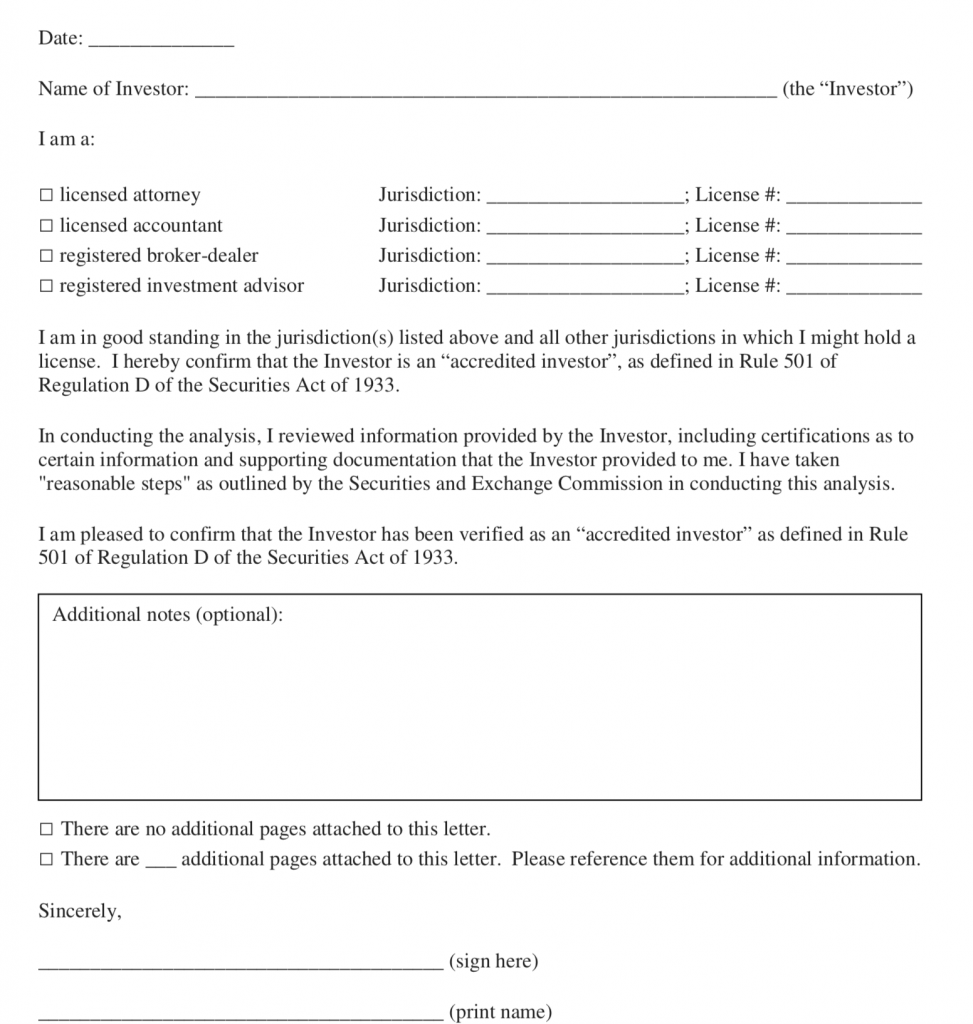
Above is one form of third-party verification

Limited Partner Agreement

This describes how the Company will be run (voting, meetings, distributions, etc.). It lists all the rights and duties of the LPs and GPs. 

Subscription Agreement

This describes the investor to the GPs, giving details about their qualifications to invest, how much they will be investing, etc. 

Investor Suitability Standards

Make sure the syndication is suitable with you. Are you an accredited investor? If you’re not, but you are a sophisticated investor, then you must invest in a 506(b) deal.

Review Module 2 if you need to review 506(b) vs 506(c) deals.

Conclusion and Key Takeaways

The PPM Is Your Investor Bible – The Private Placement Memorandum (PPM) outlines everything you need to know about a deal structure, returns, risks, and your legal rights. If there’s no PPM, it’s a red flag. Move on.

Accreditation Matters More Than Ever – With the shift to 506(c) offerings, you must be an accredited investor with third-party verification. No letter, no deal—start that process early if you want access.

Understand Where You Fit In – Before wiring funds, know your place in the capital stack and how distributions will work. The Limited Partner and Subscription Agreements detail your rights, risks, and responsibilities.

PPM Quality Reflects Deal Quality – Expect typos, but not sloppiness. A well-organized, professional PPM shows the sponsor takes compliance and investor transparency seriously.

Deal Closing Timelines Aren’t Always Linear – Sometimes you wire funds before signing, sometimes after. The operator’s top priority is closing the asset with the bank, and seller—investor onboarding happens in parallel.

Not All Deals Are Open to Everyone – If you’re not accredited, you’re limited to 506(b) offerings. Always check suitability standards before you waste time evaluating a deal you can’t legally join.

SEC Compliance Isn’t Optional – Sponsors operating in the grey risk severe penalties. If your sponsor is shifting strategy to stay compliant, that’s a sign of a serious operator, not a red flag.

Third-Party Accreditation Is Getting Easier – Whether through a CPA, attorney, or platforms like VerifyInvestor.com, getting accredited is straightforward—but it doesn’t last forever. Plan ahead.

Message to investors in Sept 2022

I am sad to announce (yet relieved at the same time due to SEC risk – see below) that we are moving toward doing 506C offerings, which will not allow for non-accredited investors. The goal is to come back in the future and do Reg A+ (https://www.sec.gov/education/smallbusiness/exemptofferings/rega) offering that does allow for non-accredited investors.

Offerings under Rule 506(c) are open to accredited investors only, so it helps to have your accreditation letter ready before you need it.

Accredited investors… this means that you will need to get third-party proof of Accreditation, which is a pretty simple process that will be a seamless process in our signing portal, but I wanted to give you the heads up now.

The Mission is still the mission, but the SEC makes it hard to do this. At the end of the day, I don’t want to get in trouble, so I need to play it safe and do 506C-accredited only deals.

I don’t want to go to jail or, at the very least, pay 200k to fight a legal battle with them. You can thank your government for that… I just don’t want to end up like a lot of those daisy chain syndicators that got busted. A lot of those guys are or too small for the SEC to go after, but then again, they don’t have anything to lose, whereas we are a substantial investment group, it is not in my best personal interests to keep operating as I once have… sorry.

Here are your options (not giving you any legal advice) if you have not become certified as an accredited investor yet:

  1. Take a Series 7 or 66 test, as I hear this will satisfy you to be Accredited.
  2. Easy method – Get a letter from a licensed professional (CPA/lawyer). This is probably the easiest method if you are right on the edge.
  3. Difficult method – A website like VerifyInvestor.com will be able to third-party certify you. However, I hear they only last for less than a year, and they will ask for a lot of documentation.

This is educational content, not tax, legal, or investment advice. We are not attorneys, CPAs, or financial planners. Please let us know if you need a referral to a 💼 CPA, ⚖️ Lawyer, or other vendor here.

Talk it through with us

Questions on “Syndication PPMs” as you look at real deals? Join The Wealth Elevator investor community and bring them to your onboarding call.

Join the club and book your onboarding call

Joining is free.

The Wealth Elevator Podcast cover art

The podcast behind this course

The Wealth Elevator Podcast

Lane's show for accredited investors on passive syndications, taxes and alternative investments. Many of the lessons in this course started as episodes.

Listen on Apple PodcastsWatch on YouTube