


Numbers in the examples on this page are hypothetical and for illustration only. Return targets are not guarantees, and investors can lose money.
Other Alternative Investments You Might See Out There….
Let’s dive into other alternative investments you may find as another investment option.
Land Use Restrictive Agreement (LURA)
A Land Use Restrictive Agreement (LURA) is an alternative investment strategy where a property is under a LURA agreement, which is when the owner exchanges some rights of the land use for future tax credits. The restrictions are usually a maximum rent that can be charged for a unit and requiring that some or all units be made only available to households whose combined income is below a certain percentage of the average median income.

One example of this alternative investment is when I was looking into an investment opportunity that had a property that had a LURA on the land for 30 years. It limited the rents being charged at the property to 60% of the median household income for the area. Not saying it’s a bad investment, but once a property has been low income or more than 10-20% of their tenants on government assistance, the property develops a negative sigma (aka the place you get your drugs from).
I do like to make a direct investment with a tangible asset; however, with my more conservative investment strategy, I personally don’t invest in these types of projects (pun intended), but an individual investor could make a tremendous amount of money if they are willing to take this risk. The same can be said for Opportunity Zone projects.
Investing in Shopping Centers – Triple Net (NNN)

Value-add apartments can be an investment vehicle with higher returns and an alternative strategy for retail investors who typically invest in traditional assets, but it can also mean higher risk than needed. This can be especially true for large value-add projects with less than stabilized rent rolls (less than 90% occupancy) and recourse bridge loan debt. Many individual investors under 1-2M net worth will need to grow their net worth in these 12-17% IRR deals; however, an accredited investor over 2-4M net worth who has reached Critical Mass could add this alternative investment to their investment portfolio.
A triple net shopping center is a great way to sustain legacy wealth and achieve financial goals with very little headache. Plus, you can be a general partner for tax reasons (750-hour active participation rule) with very little actual effort.
Post Pandemic Update – I have generally stayed away from this sector, but if purchased at the right cost basis, any investment, even traditional investments, makes sense.
Investing in Hotels
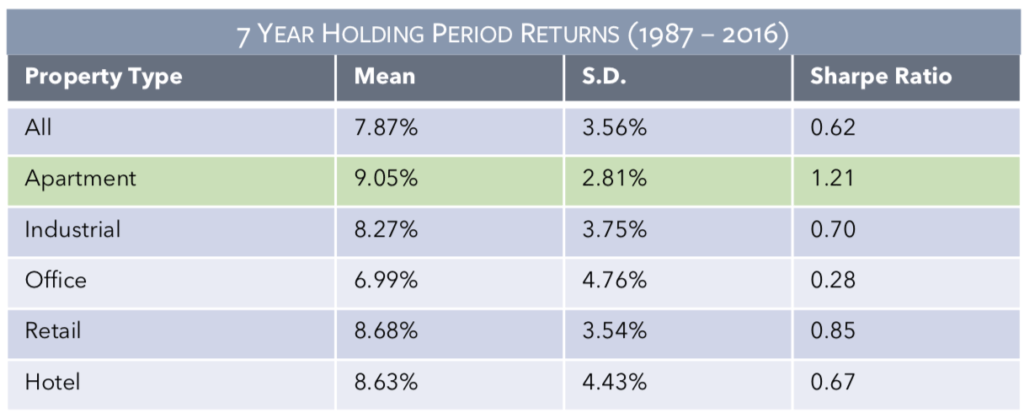
Hotels are another real asset that can provide portfolio diversification. Below are some videos that give an overview of this asset class.
17:01 Mid Tier Example Hotel
0:33 Why Consider Hotel Investing
12:40 Different Types of Hotels
17:22 Strength of Hotel Investing
22:26 Weaknesses of Hotel Investing
25:03 Metrics | STAR Report in Hotel Investing
33:06 Competitive Advantage of Hotel Investing

Value-Add Leasing Strategies
Below are multiple value-add strategies to employ when investing in Shopping Centers:

Leasing Vacant Spaces
The easiest way to add value for real estate investments is to lease any vacant spaces, which increases cash flow and, ultimately, NOI/value. However, not all tenants add equal value for shopping centers. Some tenants might just be a placeholder to fill a vacant space, but in retail leasing, the other key is do they attract other quality retailers that will pay higher rents? Retail tenant selection becomes vital to adding value for the shopping center.
Retailers want shopping centers that can produce the highest sales for their company. And, the higher the sales a tenant does, the more they can pay in rent! So when making an investment decision on a property to acquire, we look at the area demographic history and trends, sales reports, existing tenant mix, market dynamics, design/layout of the property, current rent roll, historical financials, and other capital market conditions that could impact our value-add strategy.
By simply looking at the rent roll, we can find a way to add value to the asset. For example, we have a 5,000 sq ft vacancy next to a 10,000 sq ft space that is leased by a low-quality retailer at below-market rents. The low-quality tenant’s lease expires in 12 months, and we know there is a quality hardware store looking for 15,000 square feet in the market. You could negotiate a Landlord favorable “as is” (no tenant improvements or tenant allowance) 10 year lease to occupy the entire 15,000 SF for $6.00 per square foot rent which would add $90,000 in income and $1,125,000 value at an 8% capitalization rate ($90,000 annual rent/.08 cap =$1,125,000). That’s a lot of value creation and leases your vacant space.
Reducing Expenses Wisely To Maintain Service Levels.
Reducing expenses is another way to add value for real estate investments; however, you will not get as much value as leasing. We always rebid service contracts, appeal real estate taxes, and reduce payroll where prudent. Defined benefit pension plans can be replaced with SEP/IRAs.
Strategically replacing outdated equipment and fixtures with energy-efficient lighting and HVAC (where the landlord is responsible for energy costs or replacement) can also increase your bottom line. Reflective TPO white roofs and adding extra insulation during a reroof also dramatically decrease energy costs.
If you neglect the property, most landlords will be required to spend more on capital expenditures. More money in capital expenditures (roof replacement, HVAC replacement, not negotiating vendor contracts) equals less cash flow to individual investors. Additionally, if you save more money for your tenants, you can push renewal rental rates, which impact your NOI = VALUE.

Developing Outparcels is Turning Pavement Into Gold.
Another alternative asset class are outparcels (sometimes called Pads or Out Lots) which are the buildings closest to the street that come most commonly in the form of fast food (Quick Service Restaurants/QSR), banks, small strip centers, and drug stores but can be an amazing array of service and retail tenants that benefit from high visibility or the need for a drive-through (drive-thru).

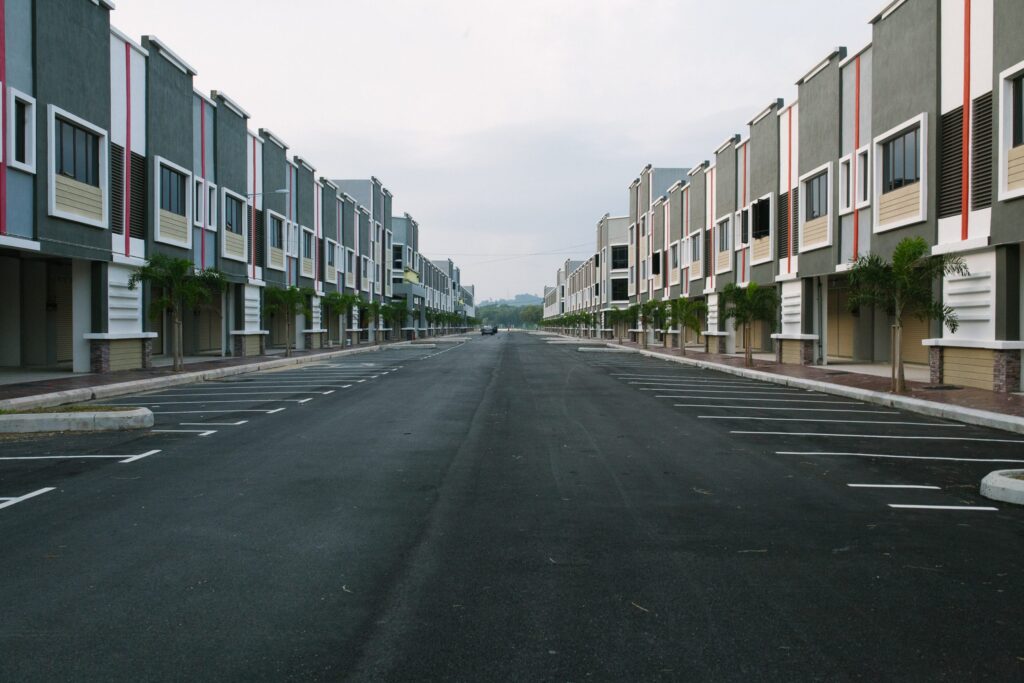
With cars getting smaller and ride-sharing apps, parking requirements have been reduced over the past five years. So, converting that sea of asphalt in front of the shopping center has made a liability a key real asset in driving value and cash flow. Even if there are existing outparcel buildings, you might be able to squeeze in an additional outparcel or two (maybe even an ATM or Billboard in the side/rear of the center).
This is usually accomplished by getting the zoning approval and subdividing the property so that the parcel pays its own taxes. It also sets up the property for another value-add strategy if done properly. The outparcel can be developed through a number of methods.
Bringing in a “Desirable Tenant”

Let’s say we reached out and could attract a desirable tenant like Old Navy; however, we would need to give them a larger tenant improvement allowance of $50.00 per square foot or $750,000 (15,000 SF x $50 PSF) total for their construction. Old Navy will do more sales volume and attract more people to the shopping center, which will raise renewal rents and the probability of existing tenants renewing. Additionally, Old Navy will attract other desirable tenants that previously wouldn’t consider leasing from our property.
One strategy to combat the high tenant improvement allowance we would amortize the tenant improvement allowance over the tenant’s lease term ($750,000/10-year lease = $75,000; $75,000/15,000 SF = $5.00 PSF/year *simplified for illustration purposes). Now your rent is $11.00 per square foot ($165,000 per year) instead of $6.00 per square foot for the Hardware store (in the “filling vacancies” example).
Old Navy will also be valued at a lower cap rate of 7%, so your new value creation is $2,357,143 ($165,000 annual rent/.07 cap rate = $2,357,143 in value). After looking at all the options, who wouldn’t take the value from the Old Navy lease? However, slumlords take the easy, low hanging options all the time, which creates more Value-Add opportunities for us.
Convert Gross Leases to Net Leases.
Another way to add value through leasing is converting “Gross” lease structures (Tenant favorable) to “Triple Net” leases (Landlord favorable). When renewing existing leases, we always try to shift the risk of expense increases back to the tenant who is getting the benefit of the services associated with those expenses. Even if we cannot get them to a full NNN lease, we will at least shift them to a “Modified Gross” lease where the tenant pays the increases from an established base year.
Again, lazy Landlords will accept gross leases just to get a deal done, avoid confusion/hassles, and save a few $ on legal fees. Which, in the long run, will cost investors thousands of dollars.

Let’s say gross leases discount $15,000 of potential NOI at an 8% cap rate. $15,000 annual losses/.08% = $187,500 in lost value. It all adds up.

Selective Renovations Can Revitalize A Shopping Center
Simply spending a lot of money on a new facade will not automatically translate into additional rents or an increase in value. That is why we judiciously weigh the cost against the benefit of renovations and redevelopments. Less expensive and high-impact upgrades to appearance can include paying to replace tenant signs, adding pylon signs with tenant identification, adding, replacing, and improving landscaping, seal coating, and new striping, and replacing existing lights with LED lights decreases electric bills and increases light in parking lots.
We find the biggest bang for the buck is renovated or increased landscaping, which softens hardscapes and creates an inviting atmosphere. Along with LED lights making the parking lot and common areas brighter and safer, it reduces expenses. Plus, some utility companies subsidize the cost of retrofit, and there are great tax credit programs.
It is much more expensive to perform façade renovations, and even demolition of existing buildings, to reconfigure and build new for quality tenants.
Selling Off Outparcels is Buying Wholesale and Selling Retail.
Another excellent way to add value is parcelization. Subdividing a larger property into smaller parcels or putting every outparcel building on its own tax parcel gives the property owner the ability to sell off those parcels separately.
Our strategy is to arbitrage the lower price per square foot and higher cap rates between larger multi-tenant shopping centers. There is a larger investor pool looking for smaller stabilized Single-Tenant Triple-Net leased properties than there is for larger, higher-priced multi-tenant properties.
Some of the reasons for this are: lower price point is easier access to commercial real estate, and Single Tenant NNNs have much fewer management hassles. With single-tenant triple-net leased deals, one of the major decisions is do you want your rent check mailed or sent via ACH directly to your bank account.

Talk it through with us
Questions on “Other Investments Part 1: LURA, Hotels, Triple Net” as you look at real deals? Join The Wealth Elevator investor community and bring them to your onboarding call.
Join the club and book your onboarding callJoining is free.

The podcast behind this course
The Wealth Elevator Podcast
Lane's show for accredited investors on passive syndications, taxes and alternative investments. Many of the lessons in this course started as episodes.
Listen on Apple PodcastsWatch on YouTube