


Tax law update (2026): the 2025 tax law restored a permanent 100% first-year (“bonus”) depreciation deduction for qualified property acquired after January 19, 2025. See the IRS notice on the additional first-year depreciation deduction. How much of a K-1 loss you can use depends on your other passive income and your situation, so check with your CPA.
Frequently Asked Syndication Tax Questions
BELOW ARE QUESTIONS FROM PREVIOUS REAL ESTATE SYNDICATION DEALS WITH SLIGHT CHANGES TO PRESERVE LIMITED PARTNERS’ PRIVACY. THE SPECIFICS ARE BY NO MEANS TYPICAL, SINCE THEY ARE FROM A WIDE RANGE OF DEALS. HOWEVER, IT ALLOWS INVESTORS TO GAIN INSIGHTS FROM OTHER LIMITED PARTNER SYNDICATION INVESTORS.
Can I invest in a real estate syndication deal using my retirement funds?
Yes, you will need to roll over your existing retirement funds (401(k)s, IRAs, etc.) into a self-directed IRA account (SDIRA). In an SDIRA, you can choose what real estate syndication deal you want to invest in and have the account custodian invest on your behalf. You will need to provide the custodian with copies of the legal documents (PPM, operating agreement, and subscription agreement). All returns and cash flow distributions from the syndication investment must go back into the SDIRA, and not into any other accounts (i.e., personal).
When does selling interests in an LLC constitute the sale of securities?
Once a real estate investor purchases interests in a real estate syndicate it is considered illiquid. However, it is possible to sell interests/liabilities via a private sale (typically a fire sale transaction).
We see many people try to avoid securities laws by saying they are doing “joint ventures” when, in reality, they are selling securities. Selling interests in a Manager-managed LLC with multiple investors contributing capital and a few key people managing the real estate syndicate would constitute the sale of “Investment Contracts,” which are securities. Selling interests in a Limited Partnership with the limited partners contributing capital and the real estate syndicator managing the company would also constitute the sale of Investment Contracts.
One way to avoid selling Investment Contracts is with a Member-managed LLC or General Partnership structure in which “all members are responsible for actively generating their own profit,” and all are responsible for management of the company, which could include opening and closing bank accounts, contractually binding the company, etc.
A Member-managed LLC might be feasible with 3-4 members who know each other very well and have identical objectives, but when larger groups are involved, it rarely happens. What actually happens is that a few members actively manage the deal while the rest are not actively involved in management. In that case, it doesn’t matter if the company is Member-managed, because certain members will attest that they didn’t participate in management and therefore will likely be deemed as a passive investor. If the deal is ever scrutinized by a securities regulator (or one of the investors’ attorneys), it will likely be deemed to have been the sale of securities without following an exemption (which requires proper disclosures and SEC/state securities notice filings).
In our experience, any more than 5 people in a Member-managed LLC is a recipe for disaster as they can’t agree on how things will be done (too many cooks spoil the supper…), so it creates dissension, stress, and in the worst cases, litigation.
I’m trying to decide if one is better than the other for tax purposes. Is there any difference in how the UDFI will apply for these: 1) SD IRA, 2) SEP-IRA, 3) Solo 401,K 4) SD IRA (operated as an LLC) So this one is confusing… My LLC owns an LLC (syndication), which owns a property
The solo 401(k) is not subject to UDFI but is subject to UBIT. The IRAs are all subject to UBIT and UDFI. Note that generally the passive income flowing back to you is very low and the as a result we don’t see a huge UBIT tax.
Another idea to reduce tax liability would be investing in a debt position (lending) rather than equity. The interest you would receive is free of UBIT and UDFI tax.
(This suggestion of a “debt” position or note investment with the SEP IRA to avoid UBIT and UDFI tax is a creative one… but it’s a very low chance of happening because it’s just too complicated and honestly not worth the effort from the syndicator’s side. It’s a very similar case to a Tenant-In-Common (TIC) arrangement where an investor has 1031 exchange funds and wants to parlay that money into a syndication. It’s possible, but from the syndicator’s perspective it’s a lot of unnecessary work when you can just raise the funds the traditional way. Caveat: if you are bringing in a huge amount of mone,y say 50% of the rais,e then that might tip the scales in your favor. In the real world, I just spoke to someone who did a TIC and brought a serious percentage of the total raise into a deal. They said they were luc,ky and the lead told them that it was not worth it and they would never do it again… and to consider it a personal favor.
Can you explain what tax savings there are to investors who receive a K1?
Check out the webinar for the best explanation. Bonus depreciation, which is not really more depreciation, but it is front-loaded in the beginning years. So if you believe in the time value of money and how it’s better to have those savings today… It’s a big deal. We will cover this in an educational section in this webinar, and how the Cost Segregation is used to support the accelerated depreciation. I did a couple of quotes to do a cost segregation, and I will include those examples as well. Of course, talk to your own Legal Professional.
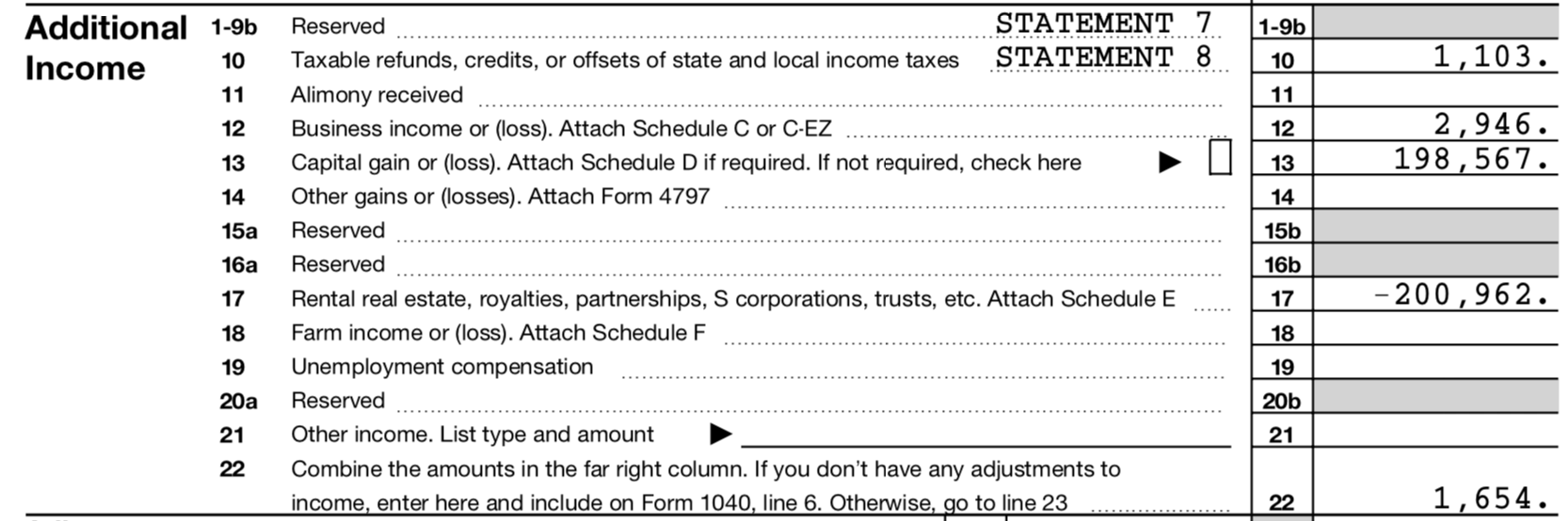
I was unable to declare my SFH rental property’s loss’ in my taxes last year due to having too high an income (AGI). Is cost segregation treated differently, so that I would be able to apply that to my taxes?
Your passive losses should be accumulating. Personall,y I am walking around with a few 100k of passive losses, so when I do realize a gai,n I do what I did in 2018 and use some passive losses. See below.
I wanted to use my funds from my SEP IRA, which is currently in a qualified intermediary trust. What is the UBIT tax? Will I be subject to that on this deal? Also, should I set up an LLC that then loans the money to its LLC? How can I structure this for tax and liability benefits?
[Note: From CPA and not this is NOT legal or professional advice]: When you invest in a business (syndicate = business) with your IRA, the IRA will be subject to UBIT (unrelated business income tax) and UDFI (unrelated debt financed income).
For our purposes, UDFI is produced when an IRA uses debt to purchase real estate. Essentially, the portion of the property’s income considered UDFI is based on the percentage of rental income derived from debt.
For example, Property A is purchased for $100,000. You put down 25% of the purchase price as a down payment and finance the remaining 75% with a traditional mortgage from the bank. The property produces $10,000 in net income for the year. $7,500 (75%) of the net income is considered UDFI and is subject to UBIT.
There is a deduction for the first $1,000 of income subject to UBIT. Income subject to UBIT over $1,000 is taxed at trust rates. For 2017, trust tax rates start at 15% and max out at 39.6% after just $12,400 of income subject to UBIT.
UBIT is paid by the IRA account. If, for whatever reason,n UBIT is paid directly by the taxpayer, the amount paid is considered a contribution to the IRA.
Talk it through with us
Questions on “Taxes FAQ” as you look at real deals? Join The Wealth Elevator investor community and bring them to your onboarding call.
Join the club and book your onboarding callJoining is free.

The podcast behind this course
The Wealth Elevator Podcast
Lane's show for accredited investors on passive syndications, taxes and alternative investments. Many of the lessons in this course started as episodes.
Listen on Apple PodcastsWatch on YouTube