


Numbers in the examples on this page are hypothetical and for illustration only. Return targets are not guarantees, and investors can lose money.

Bad Investments
Most of the time, individual investors make a bad investment decision out of the fear of missing out or greed. While a good investment opportunity is to find, it’s better to wait a year or two for the next deal. Never allow yourself to feel rushed to fund investment opportunities. If you miss out, you miss out.
I see a lot of investment opportunities come into my inbox. Syndicated investment funds or smaller deals from another real estate sponsor. You have seen them… yup, I’m on that list and saw it too. I see a lot of bad deals come my way, and here is where I capture my frustrations and record what I see.
Below is a list of these exceptions we found.
Just because a sponsorship deal you are looking at is doing one or many of these does not mean you should not invest. Every deal is unique, and working with the right honest general partner should always be the primary reason for investing in a deal.
We discuss these frequently nuanced concepts in our Family Office Ohana Mastermind as they come up, we get a dialogue going, which helps people truly understand the concepts below:
Calculate Exit Valuation (Sale Price) Using Forward NOI and Exclude Replacement Reserves From the NOI Calculation
The projected sale price has a huge impact on total projected returns. Projected sales prices are typically determined via an exit cap rate. We have touched on it a couple times in this eCourse to look for at least a 0.50% cap rate expansion at exit (some leeway there for more heavy value add and shorter hold times… but still).
Now this is another cat and mouse game where the syndicator will make the projected sale price higher in other ways than simply lowering the exit cap rate by increasing the assumed NOI, or the NOI used to derive projected sale price.
The standard method is to use the trailing 12- month NOI for the projected sale year. For example, a sale projected in Year 5 should use Year 5 NOI but the tricksters are using Year 6 NOI with a 3% rent increase and 2% expense increase.
Further more you can omit replacement reserves from the terminal NOI calculation. Whether you account for replacement reserve above or below the line (as operating expenses or as capital expenditures) doesn’t really matter in a cash flow context, but it makes a substantial difference in valuation. For example, if I’m going to put the standard $300/unit/year of replacement reserves below the line, I just “increased my NOI by $300/unit. If this income is valued at a terminal cap rate of 6%, I just increased the projected sale price by $5,000/unit ($300 divided by 6%). For a typical $100,000/unit property value, that is a 5% swing in value!
Modeling Rent Growth Based on Aggressive Research Reports
Syndicator uses a very aggressive but reputable research report that claims the market or submarket you’re buying is going to see 3-6%+ rent growth over the next year. You then plug in this growth assumption on top of the aggressive pro forma rents you’re projecting.
Not Hitting the 7-8% First-Year Cashflow? Do This to Appease Unsophisticated Passive Investors Who Want Returns in the First Month of Ownership | Raise a Little Extra in Your Operating Reserves (200-500K) Or Capex Budget
This is pretty much a Ponzi Scheme, but if the deal structure is done with the right disclosures, it’s legal to do. But it is effectively like carrying an extra loan in the beginning.
This is often tipped off by unusually high cash flow in the very start of the deal or cash flow before month 6 of ownership. Remember that lenders restrict distributions in the first two quarters of ownership in order for them to protect themselves (the lender) and to be conservative.
There are a couple of ways to spot this out as a limited partner which is 1) examine the “sources and uses for cash” and make sure there is not too much padding, and 2) look out for unusual or very artificial cashflow projections. For example 1st year cashflow of 8%, 2nd year of 8%, 3rd year of 9.45%, 4th year of 9.65…
Side note: This deal structuring has been a very frustrating thing for my company to deal with. Some passive investors expect very early payouts because of this aggressive tactic and are none the wiser.
Underwrite Cheap Financing With a Yield Maintenance Prepayment Penalty but Exclude Any Financing Fees or Prepayment Penalties From Projected Sale Proceeds Calculations
Most deal structuring involves properties that are financed with 10 to 15-year notes, yet are underwritten to a 5-year hold. This creates a mismatch between the business plan and the debt, since there is often a major prepayment penalty to reckon with if the loan is prepaid early on in its term. Combine this with the fact that most “sort of” sophisticated limited partner investors are looking for long loan term periods of 12+ years.
Syndicators do not underwrite any prepayment penalty in their model. Sponsors assume they will sell the deal with a loan assumption, forcing the buyer to take on the existing debt. There is no cost to the seller in terms of financing fees or prepayment penalties if the loan is assumed, however, the debt may be less attractive than what is available in the open market and therefore will reduce the sale price potential as the value can be held back by things such as amortization, low LTV, and high interest rate. If you want to include 10-year fixed-rate financing with a yield maintenance prepayment penalty in your deal structure, the best way to underwrite this is by forecasting a 10-year hold, making the business plan and loan coterminous, thus avoiding the omission of any brutal prepayment penalties in your model.
In the past, Cap Rates have lowered, which has made for explosive evaluations ,which have launched the profits of a deal to more than overcome for this oversight. But it’s when things are tough that these small oversights come to light. We normally take a hit on the rate and lower the term length from 15 to 12 years, which we feel is good enough to go into a hybrid loan, which allows for more flexibility to sell early without a large pre-payment penalty. Overall, this is not a deal killer, but something to be aware of and not to think one-sided that you want “non-recourse 15-year notes!!!”
Misleading Acquisition Fees
It’s important for every single investor to review the closing fee when the transaction is completed. A normal acquisition fee paid to the sponsor at deal close range from 1-3%. But be careful that there is not a separate 1% lending fee, 1% funding capital fee, 0.5% marketing fee, etc, which are all a part of the acquisition fee. Just make sure you add them up to take them into account. Not saying that a high fee is not justified by a general partner, but make sure the track record justifies that.
Inflating Other Income
An easy way to boost your numbers without too much trouble is to assume easy increases in Other Income categories, such as reserved parking, utility billbacks (RUBS), pet fees/rent, valet trash, storage closets/garages and furnished rentals. While being creative with ways to create additional income is great, it is easy to get too aggressive and assume the successful implementation of these various Other Income strategies across an entire property. However, these numbers are easy to overstate and are often overlooked by those evaluating deals.
*In 2020, in some syndication mentoring groups (newbie investor academies) there are coaches that spot check student’s underwriting. It was a little secret that students would get around their loose coaches’ overview by doing this tactic.
Underwrite an Unrealistically Fast Stabilization/Renovations Period While Maintaining Impossibly High Occupancy
Scrutinize a sponsor’s business plan by making sure they are being realistic with turnover numbers. You can’t bump up the rents by more than 10-15% with making the current tenants unhappy and unhappy residents balk by moving out. That might be a good thing in the long run by having lower end tenants leave but keeping occupancy/economic occupancy over 80-90% could be a challenge. As an LP, make sure that if units with 100-150+ dollar rent bumps or more than 5% of the units are being turned per month that the underwriting did not assume for over 95% occupancy or 90% economy vacancy.
Incorrect Expenses Assumed
The price of the property in the future is predicated on the NOI or net operating income. NOI is based on income minus expenses. Focusing on the expenses specifically a sponsor may greatly underestimate the expenses. In most cases, expenses will go up because you are increasing the product for tenants which makes sense why it costs more to operate. Running a class B or C building for under 4k a unit per unit is extremely rare and should be used as a low end on checking expenses.
We use our own properties to bench mark this and we use our property managers wider portfolio to come up with good estimates.
Aside from that taxes should go up. In some cases this can double in a few years.
Economic Vacancy
Sponsor might say that they are assuming a healthy amount of vacancy, 5-10%. BUT they are not assuming any economic vacancy. Economic vacancy is basically the amount of people not paying their rents even though they are occupying a unit. Or they are dead beats. Just because you are assuming 92-95% as your full occupancy you should also be assuming that a small percentage (2-4%) of tenants that don’t pay. There is more on bad collections on class C properties than class B. By asking what the economic vacancy is, is a great way to get around the BS.
Under this same thought, be wary on when a sponsor says the break even occupancy is 65%. In reality that needs to be economic occupancy to include these non collections which is a few points less than the break even occupancy.
Rent Increases per Year (Annual Escalator)
In most good markets we will use not higher than 2% annual rent increases per year. This escalator is to account for inflations. A sponsor might grab some sort of industry publication to justify a 2.5-3.0% annual rent escalator every year and I would be wary of that. Great if it happens but not a good practice.
Also be wary if sponsors get cute on how they underwrite 0-5 years where they use 4% rent increase in the first two years and 2% in years 3-6. And they say the average rent growth is 2.5. If you follow the math an increase earlier in the time frame has a greater impact than at the end of the time horizon.
This also applied to “other income” and “expenses increases”.
Assumed Loan Terms and Interest Rate
In agency debt (Fannie Mae/Freddie Mac) you don’t lock in your rate and loan process until a few days before the deal is closed which could be weeks after LP investor space is allocated.
Its our best practice to use rates and terms from our peers, past deals, and lending broker (who is upfront with us) to underwrite with wiggle-room for the rate to increase 0.25%. In most cases the loan closes with better than expected terms.
Overall the terms of the loan (+/- 0.3% rate) does not have a huge impact on the numbers at the end of the day.
Assumed Rent Bumps on New Rehabbed Units
Specifically discussing light-medium value (2k-8k of upgrades per unit)… Say the rents are currently averaged 800 dollars a month, it would be a pretty big stretch to bump rents over 15%. Giving the sponsor the benefit of the doubt, you definitely want to see economic vacancy bumped up 5-10% more in the first year. Tenants are going to be upset and move out or balk on the higher rents. This is to be expected but needs to be modeled. We do not live in a perfect world where every unit gets filled right away so we need to ensure that the underwriting is conservative.
Also, it is questionable to see other income growth in year one.
General News From Media or Brokers/Lenders
Robert Kiyosaki has a saying, “there are three sides to a coin”.
People argue that its a good time to buy or bad time to buy. For example “mfh” is overheated or commercial is getting killed by Amazon and e-commerce. I think these are mental justifications by tire kickers not to do anything.
Sophisticated investors live on the edge of the “coin”. They buy deals out our reach of amateurs due to the lack for network/knowledge. These opportunities are undervalued, with undermarket rents, with value add opportunity. Again the deals you want to get into are unique deals that hit the marks on underwriting irregardless of market. You are buying individual assets and individual sub-markets (block to block in fact) where rents or value is purchased at a lower cost basis.
Extra credit: “The guy not investing right now and hoarding cash (with net worth of under $1M… because if you can live off your cashflow, then cool, you can do what you want) is just afraid and lacks deal flow. Its like the person who complains that there is nothing to do during the weekend in LA (insert city with a vibrant scene) when in actuality they don’t have any friends (lack dealflow)… and by the no one likes (has a bad attitude and that person who makes excuses”
The news is filled with headlines to “day-trade attention.
Throughout this pandemic, even the year or two prior, we have heard brokers tell us over and over that nothing hits the market, it’s bought up before anyone even knows about it. And all of the value-add properties have been bought and renovated. Nothing could be further from the truth. We have a many 20-30+ year old properties with great structure, nice location, and in good condition, but the interiors were clearly dated. These are terrific opportunities to renovate and create a killer apartment, features that tenants today will pay for. When you see properties that were renovated just a few years ago, don’t ignore them. The seller wants you to think they’re worth more because they’re renovated, and you want a value-add deal, but there could easily still be an opportunity for you to improve it.
Also, don’t believe everything about rent freezes and no upside, as were the headlines in even the Wall Street Journal.
More resources:
https://www.multihousingnews.com/post/multifamily-refinancings-top-trends-and-strategies
https://www.globest.com/2020/11/10/why-apartment-rents-have-remained-strong-through-pandemic
Working Capital
Working capital is extra money in the bank to help float invoices from contractors. This is above and beyond the capital expenditure budget.
But if you raised all the capex budget at the onset of a deal why would you need this working capital? Well the lender is typically holding this capex budget hostage unless the sponsor shows proof to release the funds. Often the sponsor will need to complete the work and submit for reimbursement from their own capital account. Also the lender (the bank), is not always the easiest to work with and can be slow to process requests. They can also be very difficult to work with (even predatory which is why a good relationship and legal assistance is needed) despite being a key part of our capital stack. In the end, they want to have controls on spending and the success of the project.
On small to medium sized projects the order of magnitude that you want to see as a LP is 20-100k. There are some rules of thumb out there such as a few hundred dollars per unit but once you get to larger buildings there is less need for larger set asides of working capital. Too much working capital can also dilute investors returns. Just make sure working capital is accounted for and its not too fat because you also might have a situation where a sponsor is raising extra capital to “float the pref”.
Over Zealous Deals
“We did not include a large bump to overall rents (6%)”
Lane: Well the market really could not support a rent bump to begin with.
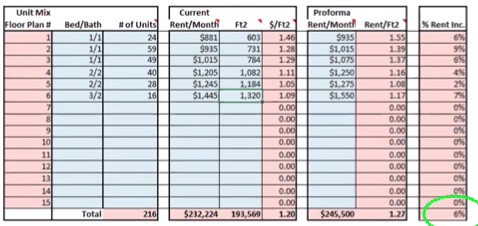
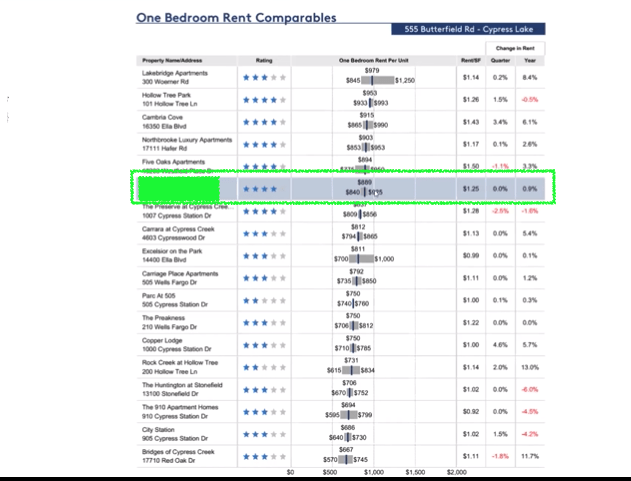
*Verifying rental comps and rents is the hardest thing LP will do and it may not be possible. There this is where you fall back on the experience and due-dilligence of the sponsor
Beware in a market where amateurs are doing large deals but when you take a look at the numbers, you are left with a high acquisition price due to aggressive bidding wars where pricing was stretched because of sharpening underwriting on expenses or overzealous rent projections. In this case, it might be better to accept 60-80% return in 5 years in a properly underwritten deal than a badly underwritten one.
Investors who were either banking on rent growth or the ability to renovate and raise rents by $200 may not be as successful given the recession caused by a post pandemic environment.
Other Income Greatly Expanding

“Ringing Out the Towel”
A sponsor told me (verbally/email) that they only have “2 more spots”!!!
This is most likely a marketing “rescue flair”… I imagine its same thing when you see 1 or 2 at this price when buying an airplane ticket.
Multiple Capital Raisers (Multi-level Marketing & Daisy-Chain Deals)
I saw another syndicator market the same deal that someone else did weeks/months after the first syndicator sent out the deal via email?
Basically the primary operator/syndicator could not fund the deal so they worked a deal with the second company to send out to their list to market it. This is likely a SEC infraction because likely the second firm is not doing anything else than raising capital.
A lot of people realized that making a podcast was a great way to find unsophisticated investors on the internet and stuff them into deals.
We have been following this trend for sometime where multiple capital raisers (3-10 people!!!) jump on a deal just to bring in $250,000-1M each. This is frowned upon by the SEC. And rumor has it that many big names have been investigated and cited.
An LP might feel isolated from this SEC non-compliance, but they don’t realize that any legal battle within the partnership can impact everyone. This is why myself as a syndicator chose to stay away from these shady characters. Plus, their deals weren’t that good anyway,y which is why they needed everyone and their mother to raise money for the deal.
When this happens the primary syndicator might also employ the above “Ringing out the towel” technique so he minimizes how much he has to pay Syndicator two.
There are very few players out there that can raise over $3M of capital. Our Hui can bring in over $10M on one deal so this is why we like to play with ourselves since it is cleaner from a SEC compliance standpoint and we have one unified voice. We are not a 1-4M dollar group amongst many other groups doing god knows what.
You can attempt to block this by simply asking “What is your role?”
Talk it through with us
Questions on “Sponsors and Deal Structure” as you look at real deals? Join The Wealth Elevator investor community and bring them to your onboarding call.
Join the club and book your onboarding callJoining is free.

The podcast behind this course
The Wealth Elevator Podcast
Lane's show for accredited investors on passive syndications, taxes and alternative investments. Many of the lessons in this course started as episodes.
Listen on Apple PodcastsWatch on YouTube