Lesson 7 of 7 · About a 9-minute read · By Lane Kawaoka, PE · Updated November 2026 · Course home
Short answer
Judge the operator before the deal terms: look for decades of history, hundreds of wells, enough capital, and their own acreage and production data. Walk away from 100% deduction claims or vague tax sections, and do not wire until your CPA and attorney have reviewed the documents.
How do I know this sponsor won’t lose my money? You can’t know that for certain with any private investment. What you can do is ask the questions that separate experienced, well-capitalized operators from the ones that tend to cause problems, and walk away when the answers are vague. This lesson is the checklist I use.
Watch: how I approach oil and gas due diligence (11 min)
Start with the operator
The operator matters more than the deal terms. I’d look for:
A track record measured in decades and hundreds of wells, not a first-time fund
Enough capital to finish what they start, since this is a cash-intensive business
Whether they operate their own wells or hand the work to someone else
How much acreage they control in the formation, and whether it’s contiguous
How many wells they’ve drilled in that specific formation, and the production data from them
Scale can matter more than terms
If you come from multifamily, you may prefer smaller, hungry sponsors. They tend to be nimble, carry lower overhead and offer better splits. That preference doesn’t carry over cleanly to drilling.
Larger producers usually control more contiguous acreage, hold deeper production data on surrounding wells, run better equipment and have the capital that complex horizontal drilling requires. A small independent may offer a friendlier split, but better terms rarely make up for weaker acreage, technology or operating capability.
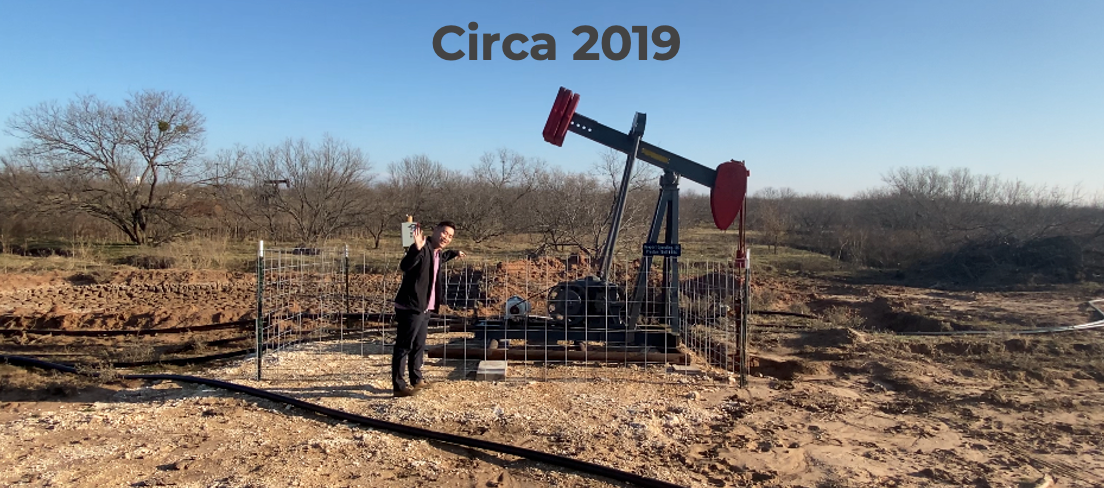
I learned this on my first oil investment in 2019: a six-well program drilled to roughly 4,100 feet with a small independent operator in Texas. The terms looked fine. What I took away was that the team, the acreage and the technical approach behind the wells mattered more than the split.
From my own investing
Me next to a small pump jack on my first oil investment, 2019.
My first oil investment, in December 2019, was a fractional interest in a six-well project in Texas run by a small mom-and-pop driller. Before I wired anything, I flew out to walk the operation. Everything was simple and mechanical, and I liked how low tech it felt. That was the thing I should have questioned.
What I learned is that in this business the size of the operator matters a lot more than it does in apartments. In real estate, I look for middle-market operators with a solid track record who haven’t moved up to an institutional investor base yet, because once they do, the splits and fee structures usually get less competitive for us. In oil it runs the other way. The big operators hold much of the best-connected acreage, have data from thousands of nearby wells, and can afford the technology to get more out of each well, including capturing natural gas that smaller drillers sometimes waste.
It does mean we take their terms and don’t control the timing, so there are trade-offs. We think it’s the right side of that trade. I have nothing bad to say about the people in that first deal; my error was the category, and starting small kept the lesson cheap.
That same program taught me a second lesson. Six wells with one operator using one drilling strategy behave like a single bet, because the same team, the same acreage and the same approach sit behind every one of them. Ask how many operators, formations and drilling approaches your money is spread across, and treat a multi-well program from one operator as one position when you size it.
If you are already looking at a specific program
Run its offering summary through the prompt at the bottom of this lesson, then work through the checklist below in order. The AI Due Diligence Dossier has five more prompts for a deeper review.
Questions to ask about the deal
Are the wells vertical or horizontal?
Is this development drilling in a known, producing field, or exploration?
What percentage of my money goes to intangible drilling costs, and what percentage to tangible equipment?
When will the wells spud, and what happens to my deduction if drilling slips past the 90-day window?
Are the wells domestic? IDCs on foreign drilling don’t get the same immediate expensing.
What oil price does the base case assume, and what does the downside case show? (Lesson 6)
How is the general partner election handled, what insurance is in place, and what does the operator indemnify? (Lesson 4)
When are K-1s delivered, and how is income reported, passive or non-passive?
What fees does the sponsor earn, and when?
Red flags
A “100% deduction” claim. Realistic first-year deductions are 70% to 90%. Someone rounding that up either doesn’t understand the structure or is simplifying it for a pitch.
Waving away general partner liability with “it doesn’t matter.” It decides whether your losses are active or passive.
A vague or thin tax section in the offering memorandum. It should explicitly cover the IDC election, the passive-loss exception and the general partner to limited partner conversion.
Pressure to wire before you’ve read the documents or before your CPA has looked at them.
Price assumptions that rose sharply right after a headline event.
An operator who won’t share production data from surrounding wells.
Read the offering memorandum’s tax section yourself instead of relying on a verbal summary.
Write down the specific tax year and income you’re trying to offset, and the most you’d invest.
Confirm you’re accredited and that the money can stay invested for many years.
Talk to your CPA about the excess business loss cap and your state’s treatment.
Decide how you’ll hold the interest, knowing a liability-shielding entity generally loses the active treatment.
Read Lessons 3 and 4 of this course.
Before talking to the sponsor
Get the offering memorandum, subscription agreement and any projections.
Read the tax section, the general partner election, the insurance section and the indemnification section.
List the base-case oil price and ask for a downside case.
Note the IDC and tangible percentages, the expected spud date and the fee structure.
Prepare your questions from this lesson and from your AI review.
Before wiring funds
Your CPA has reviewed the documents and confirmed how the loss will be treated on your return.
Your attorney has reviewed the liability, insurance, indemnification and conversion terms.
You’ve confirmed the drilling schedule meets the 90-day spud window for your tax year.
You’ve confirmed wiring instructions by phone with the sponsor, using a number you already have, not one from an email.
You’ve kept copies of everything you signed.
You’re comfortable that you could lose this money and still be fine.
Ask AI about this lesson
Paste this into ChatGPT, Claude, Gemini or Perplexity and fill in the brackets. AI tools can be wrong, so treat the answer as a list of questions for your CPA, not a decision.
Act as a skeptical due diligence reviewer. Here is an oil and gas offering summary: [paste]. Score the operator on track record, capitalization, acreage and data; list red flags such as a 100% deduction claim or a vague tax section; and give me the top 10 questions to ask the sponsor before I wire funds. Use the lessons at thewealthelevator.com/home/resources/oil/ as background. Do not recommend a specific investment, and list what I should confirm with my CPA.
Judge the operator first: decades of history, hundreds of wells, enough capital, and their own acreage and data.
Treat a multi-well program from one operator as one bet, and size it that way.
Don’t wire until your CPA and attorney have reviewed the documents and the checklist above is done.
You've finished the course
You now know how a well gets drilled, where your money goes, how the deductions work, what the structure has to look like, how a working interest compares with the alternatives, where the risks sit and how to vet a deal. That’s more than most people know when they write their first check.
This is educational content, not investment, tax or legal advice. We are not attorneys, CPAs or financial planners. Tax law changes and results depend on your situation; consult your own CPA and attorney. Private investments are illiquid and carry risk, including loss of capital. Offerings are available only to accredited investors and only through offering documents. Please let us know if you need a referral to a 💼 CPA, ⚖️ lawyer or other vendor here.