

The Wealth Elevator

Current Events
Investor News Updates

This page has been designed to keep investors informed about recent developments in the economy and provide valuable insights. At the top of the page, you will find the latest headlines. We recommend bookmarking this page and visiting on a quarterly basis. The bottom section offers a narrative of the key economic events over the past year.

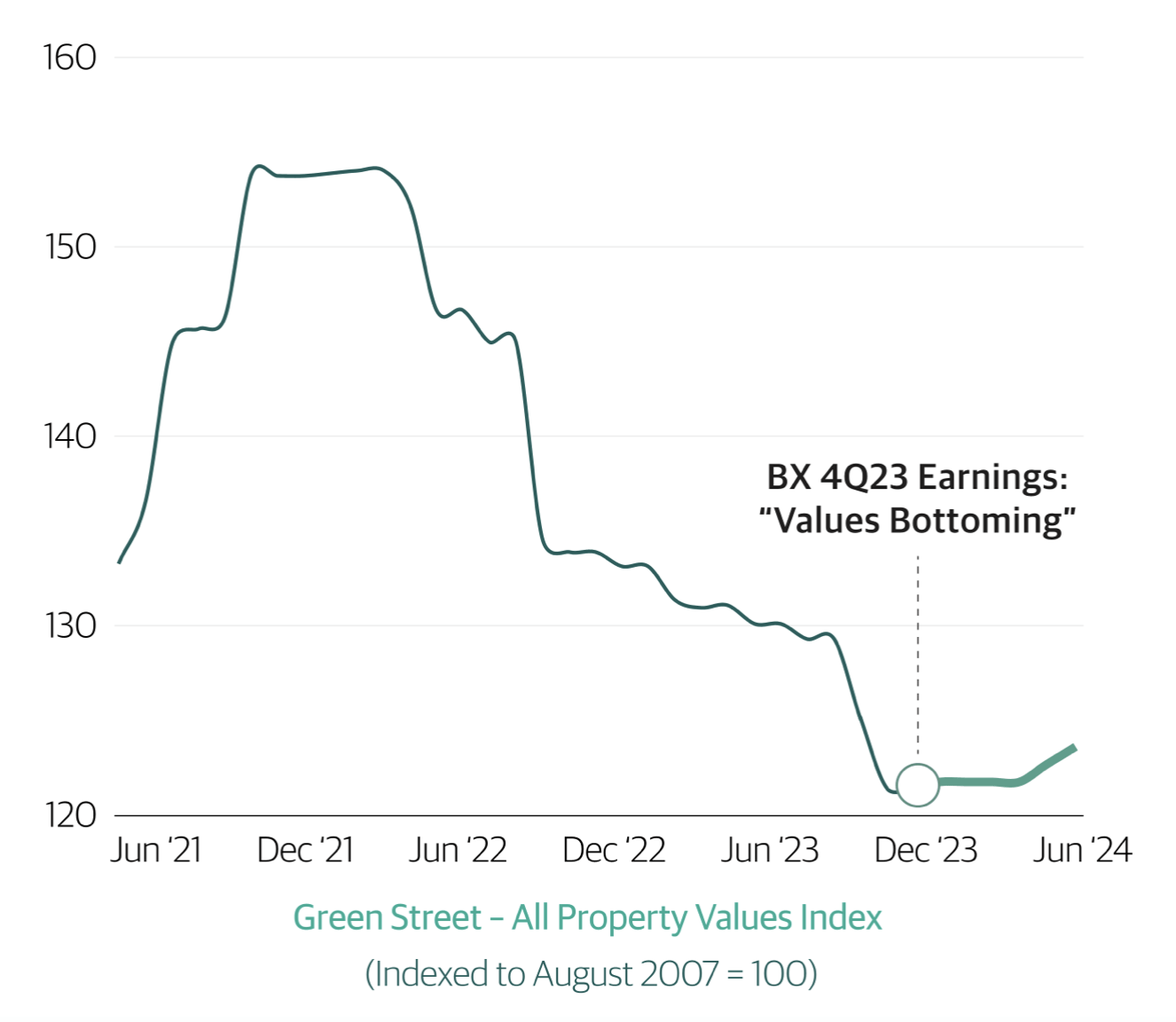
Executive Summary:  Property prices have declined nearly 20% since mid-2022, with sharper drops in Sun Belt markets like Raleigh/Durham, Atlanta, and Dallas (over 40%) and Phoenix (over 60%), though the pace of declines slowed to just -1.4% and -1% in Q2 and Q3 2024, respectively. Source Page 13 – 2025 Multifamily Outlook | Freddie Mac 

Source: Fundrise

What Happened?

Over the past two years, interest rates have risen at an unprecedented pace—faster and higher than any other period in recent history. At the same time, inflation has driven up costs significantly across the board. This combination has directly impacted the operation of multifamily real estate properties in the following ways:

  • Higher Debt Costs: Increased interest rates have led to more expensive debt service and costs to maintain rate caps (which help limit exposure to rising rates).
  • Rising Insurance and Property Taxes: Insurance premiums and property taxes have seen substantial increases, further adding to the operational burden.
  • Increased Operational Costs: The costs of labor, materials, and utilities have also gone up due to inflation, making it more expensive to run properties.

These cost increases have directly led to a decline in property values, with multifamily valuations dropping over 30% from their peak. This is what many in the industry are calling a “black swan event,” meaning it was unexpected and significantly impactful.

Why Did Property Values Drop?

The sharp rise in interest rates made it more expensive to borrow money. When it costs more to finance a property, the value of that property tends to decrease. This is because potential buyers account for the increased borrowing costs, which means they may not be willing to pay as much for the property as they would have before the rate hikes.

In simpler terms, think of it like buying a house: if your monthly mortgage payments suddenly go up, you might look for a less expensive home. The same logic applies to investors in commercial real estate.

How Does This Compare to the Past?

It’s important to note that this isn’t the first time the market has faced challenges. During the recession of 2008-2009, multifamily property values also dropped over 30% from their peak. However, they recovered within about two years and then continued to grow.

While no one can predict the future with certainty, recent trends show that recovery is on the horizon:

  • Inflation is slowing down, as seen in the core Consumer Price Index (CPI), which stood at 3.2% in August 2024. This is a promising sign for potential interest rate reductions.
  • We’ve already seen the first rate cut—a 0.5% decrease in September—and there is a strong possibility of further reductions soon.

What Does This Mean for Investments purchased in 2020-2022 at the peak of the market?

The market conditions have led to a situation where, in some cases, the value of properties is now near or below the mortgage balance. This is particularly common in properties where debt made up about 70% of the asset’s value. 

While one option could be to recapitalize these properties—essentially restructuring the debt to make it more manageable—this might not always be the best approach. In many cases, the original purchase price or basis of the property is higher than what the property is currently worth, making it difficult to justify putting in more money to stabilize it. Instead, it may be wiser to focus on acquiring new properties that are priced lower in today’s market. These newer opportunities align better with the current market conditions and have more potential for growth as the market recovers and stabilizes.

Case Study: Houston Commercial Real Estate: Why Some Multifamily Properties Are Facing Trouble Despite a Thriving Market
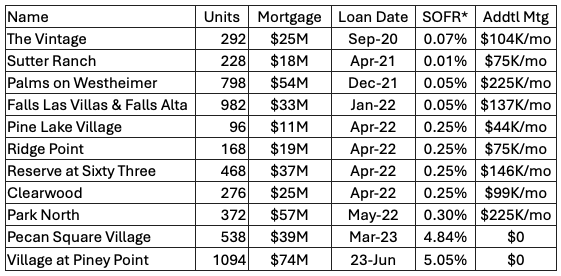
Houston (and most markets) has been making waves in the commercial real estate space recently, but unfortunately, not for the best reasons. It’s perplexing given the city’s economic vitality: it’s the second highest in the nation for job creation, rents are rising at a moderate 1.3% annually, and vacancy rates are a healthy 7.1%. Additionally, Houston is the only major Texas city where new construction aligns with its 10-year average, maintaining a balance with demand. Yet, despite these favorable metrics, some marquee multifamily properties have stumbled into foreclosure. What’s happening?

The SOFR Factor and Rising Costs
Many of these properties were financed during a period when SOFR (the benchmark interest rate for floating-rate loans) hovered near zero. Since then, SOFR has climbed to over 5%, drastically increasing monthly interest payments. These hikes, combined with rising insurance premiums and higher operational costs, have strained the profitability of properties operating on razor-thin margins.

Crime and Management Issues: The Outliers

In some cases, external factors compound financial troubles. Two recently foreclosed properties—The Village at Piney Point and Pecan Square—highlight operational mismanagement and safety concerns. Poor maintenance, tenant dissatisfaction, and high crime rates have led to plummeting renewals and leasing activity. When public reviews sour, the financial spiral accelerates.

Why Foreclosure Doesn’t Always Mean the End

Interestingly, not all properties in foreclosure will go to auction. Lenders often use foreclosure filings to pressure owners into renegotiations or sales. However, banks are also reaching their limits with the “extend and pretend” strategy, where loans are prolonged without addressing underlying issues. This practice, unsustainable in the long term, forces lenders to seek new capitalized buyers or accept losses.

The Rise of Rescue Capital and Cautious Opportunities

As these properties hit the market, distressed assets present opportunities for rescue capital firms willing to rebrand and repair. However, potential investors should tread carefully. Distressed properties often come with significant deferred maintenance and require a detailed plan to address the root causes of their financial struggles.

The key for opportunistic buyers is to thoroughly vet each investment, understanding whether the property’s issues are systemic (such as high crime) or fixable with proper management and CAPEX reserves. With commercial real estate under strain nationwide, Houston offers a window into broader trends that prudent investors should watch closely.

We have chosen to stay away from rescue capital type of deals in 2025 because 1) these are more distressed assets and we can find cleaner assets out there that provide of just as good opportunity.
Fed Cut Probability Update

  1. More Rate Cuts Likely: A confirmed top of interest rates in Q3 of 2024 after holding for a couple of years. As rates come down this will reduce borrowing costs and positively impact property values and cash flows.

  2. Current Discounts Available: The market is bottoming out after prolonged interest rate hikes. Investing now positions you to benefit as the market rebounds. Institutional lenders are selling loans at significant discounts, signaling an opportunity to buy into undervalued assets at a lower price before rates drop.

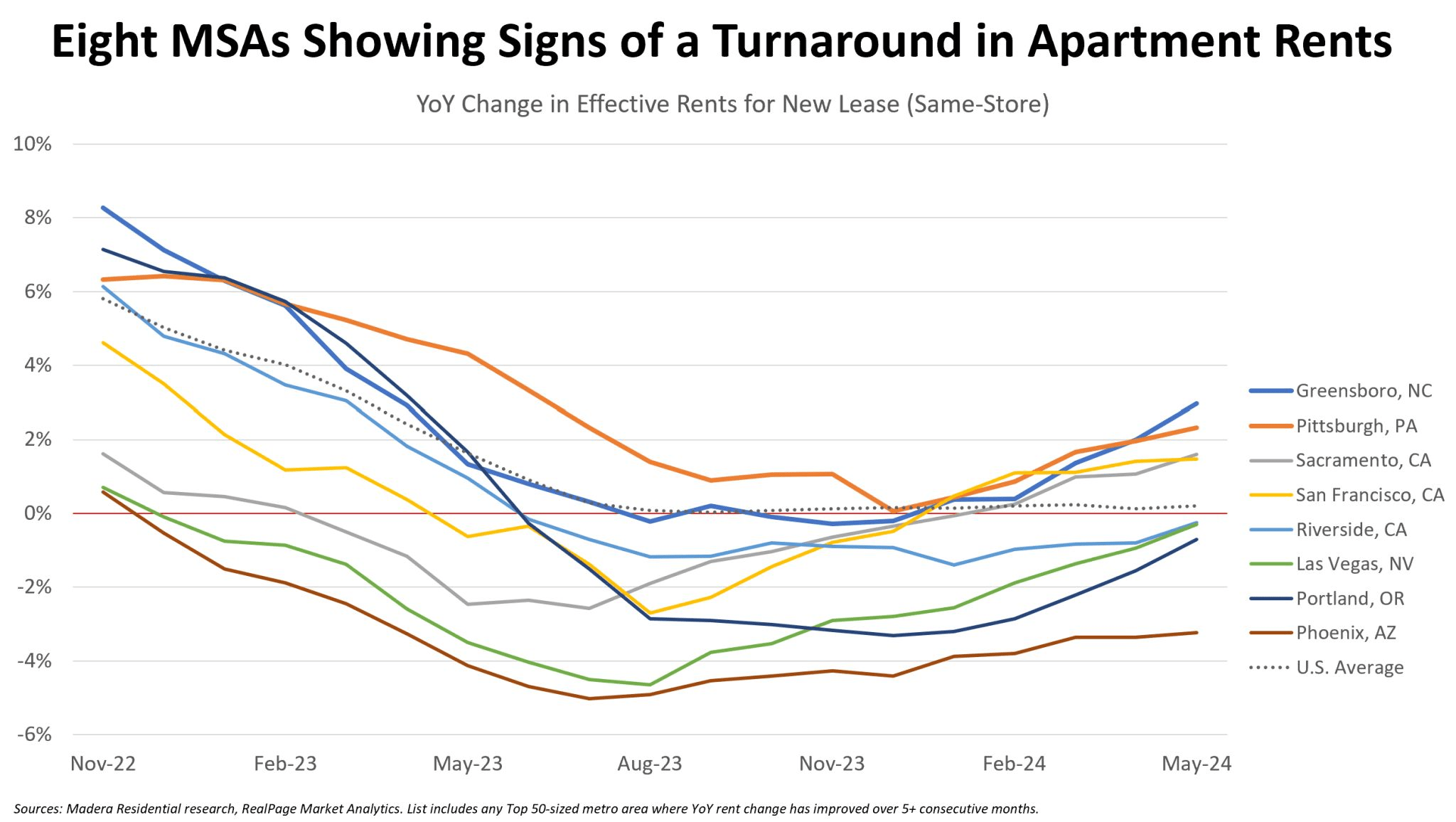
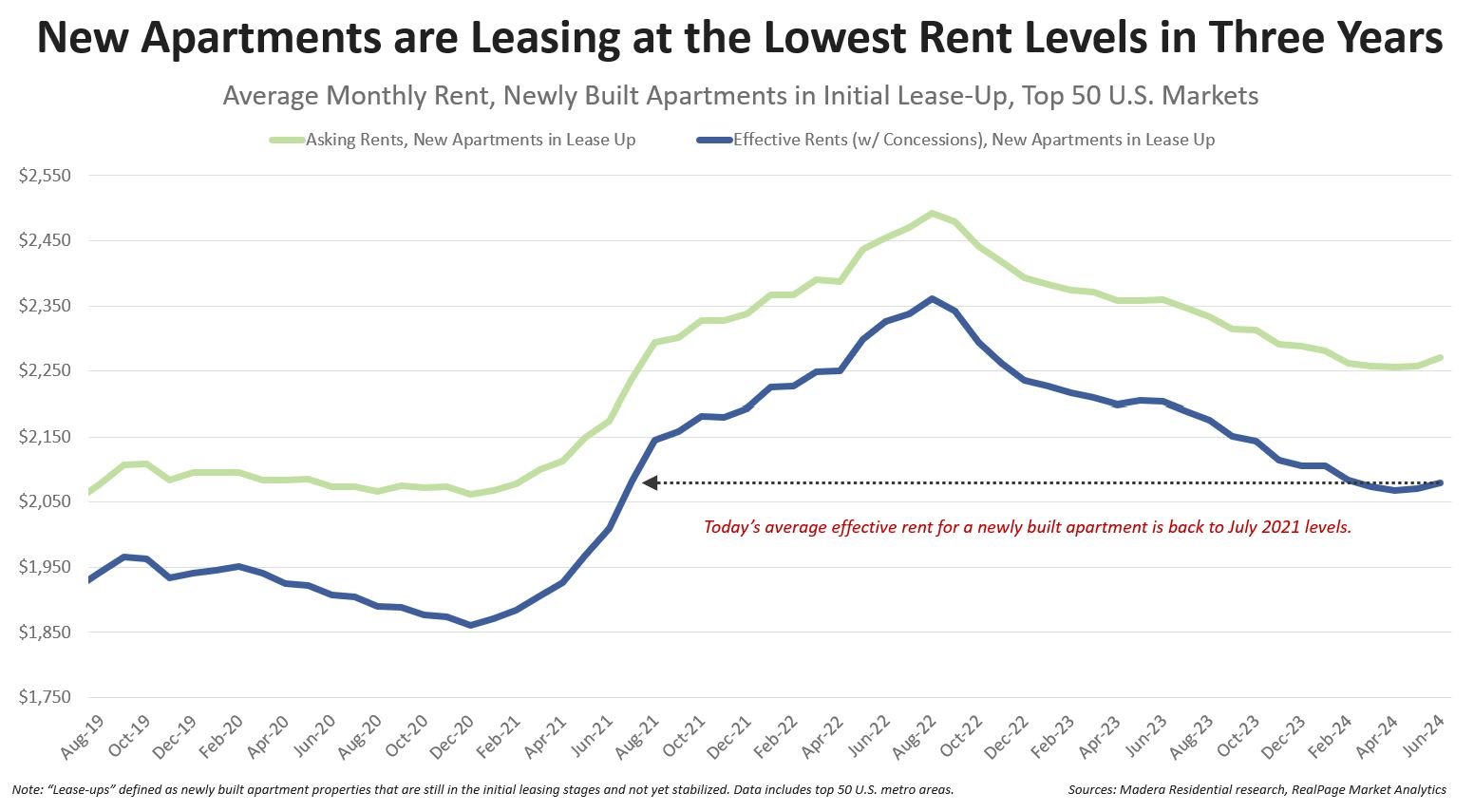
  3. Rent Growth Expected: Rent growth is projected to rebound in 2024, with a 1.0% increase across major markets. This could improve cash flow and property performance especially new investments who are entering now with brand new lower basis.

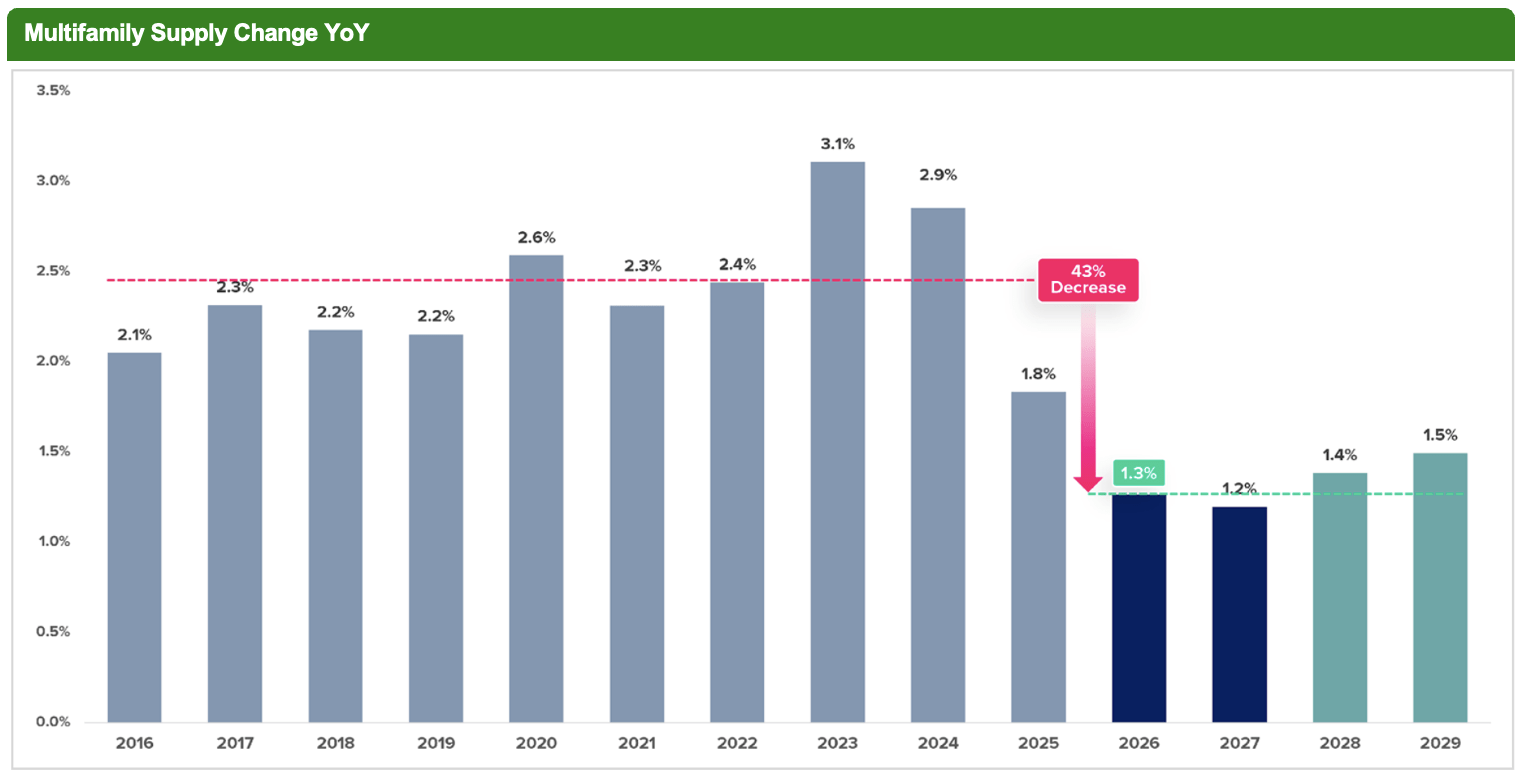
  4. Reduced Competition: New apartment construction is down 25% from last year, which should lead to higher occupancy rates and rent growth in the near future.

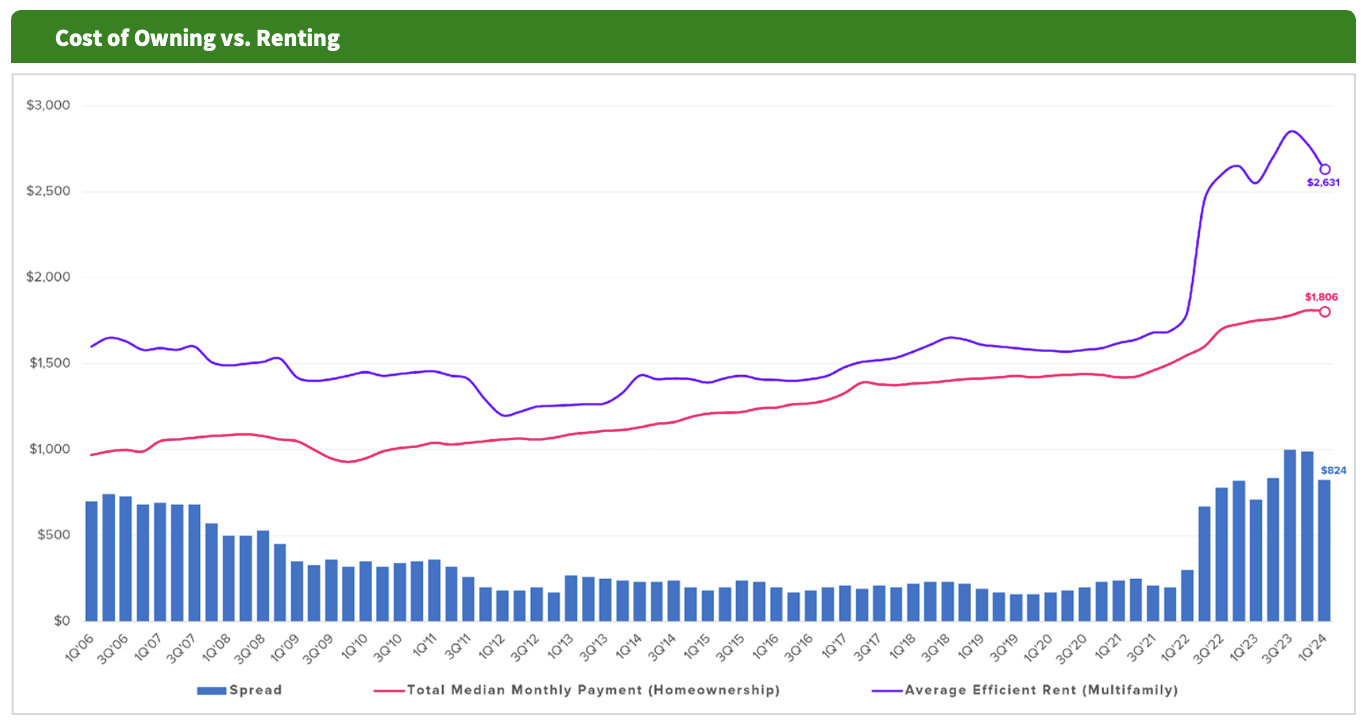
  5. Class B Properties Performing Well: With new supply slowing, Class B properties are expected to see stronger rent growth, making them attractive for investors looking for solid returns. Housing affordability impacts whether people rent or buy. When home prices rise faster than incomes, more people rent, increasing demand for rentals. As of early 2024, renting is $825 cheaper per month on average than buying a home.

  6. Upside for Class A: While Class A properties may face more competition, this presents a good opportunity to focus on mid-tier assets with better long-term potential. Essentially the play here is for us to stay away from older Class C assets as we enter this next cycle because from the renters prospective, Class B and A assets provide better value despite moderate higher rent.

  7. Long-Term Stability: As the market stabilizes, now is the ideal time to invest and position yourself for gains once the rate cuts take effect and the market begins to improve.

~75% chance we see first rate cuts in September 2024.

(Last Updated 24.08.10)

As we transition from the past quarter to the next, we haven’t seen much movement in the market – due to interest rate have yet to reverse course from the 40-year highs. However, we’re starting to see signs that the market may be bottoming out. I encourage you to check out this article for more insights: Syndicator lender Ready Cap sells problem loans for cents on the dollar – Sale is a snapshot of the deteriorating multifamily market. Values of buildings bought during the frenzied market of late 2020 into early 2022 have plunged as interest rates rose and rent growth slowed.

On the institutional side, we’re observing similar trends. There’s been a noticeable shift in the narrative around interest rates. Talks of further increases have subsided, and the focus is now on when rates might start coming down. While the exact timing is uncertain, it’s clear that the impact of interest rate hikes on the market has been more prolonged than expected.

If we haven’t had a conversation in the past year or two, now might be a good time to connect.

Despite ongoing challenges:

1) elevated expenses from insurance and taxes

2) Stagnant rent growth

3) Unprecedented new supply wave from

There are indications that some stability is returning to the market.

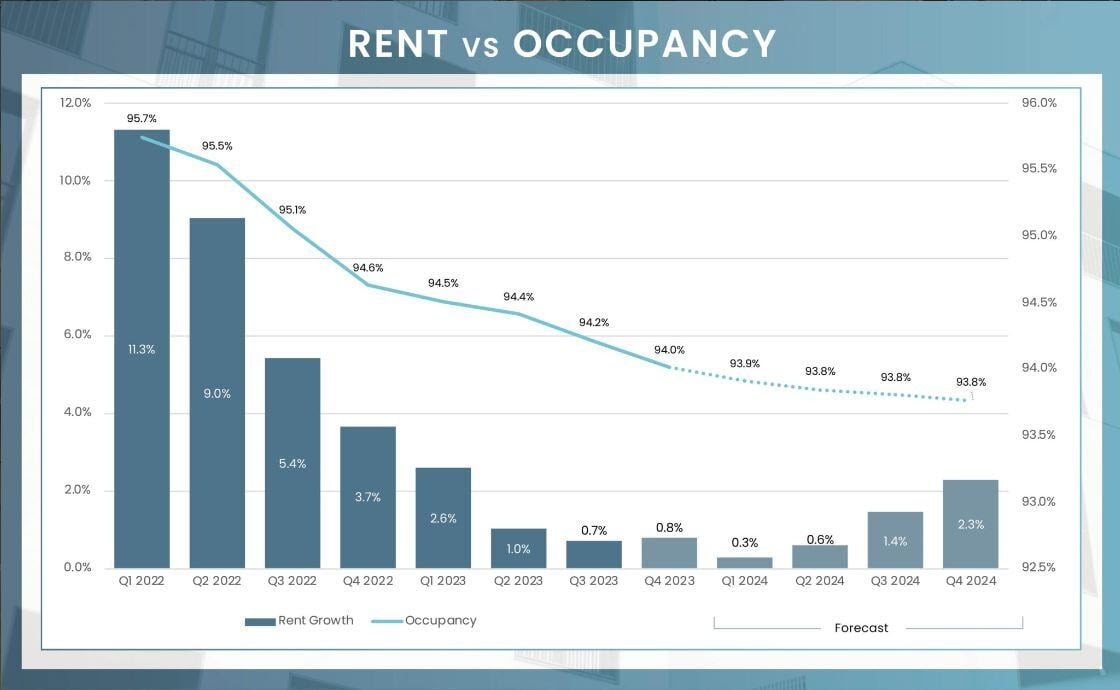
  • MMG projects a notable rebound in rent growth across major markets in 2024, with an average rent increase of 1.0%, up from 0.8% in 2023. The Midwest is expected to perform well, while some Sunbelt areas may experience more moderate growth due to higher levels of new construction.
  • New apartment construction is down 25% compared to 2023, which is expected to support stronger rent growth and higher occupancy in 2025 and beyond. Class B properties are projected to perform well, while Class A properties may see slower rent increases due to greater competition. WSJ: 9/2/2024

Other News – Updated 24.08.10 

  1. 24.08.9 – Syndicator lender Ready Cap sells problem loans for cents on the dollar – Sale is a snapshot of the deteriorating multifamily market. Values of buildings bought during the frenzied market of late 2020 into early 2022 have plunged as interest rates rose and rent growth slowed.

    “I think the worst is certainly behind us on the multifamily side,” said Zausmer, who was less willing to make a call on whether delinquencies had peaked.

    24.08.3 – Arbor Realty Trust Reported $1B in Delinquencies Second Quarter – Arbor Realty Trust reported $1 billion in Q2 delinquencies, up 10% from Q1, with a significant slowdown in loan modifications. CEO Ivan Kaufman indicated foreclosure might be necessary for some of the delinquent properties. Rising interest rates and stalled renovations have strained multifamily borrowers. Kaufman remains cautiously optimistic about potential Federal Reserve rate cuts.

  2. Aug 1, 2024 – Surge in Commercial Property Foreclosures suggests a bottom – rise in foreclosures in the commercial property market, indicating that the market might be nearing its lowest point before a potential recovery
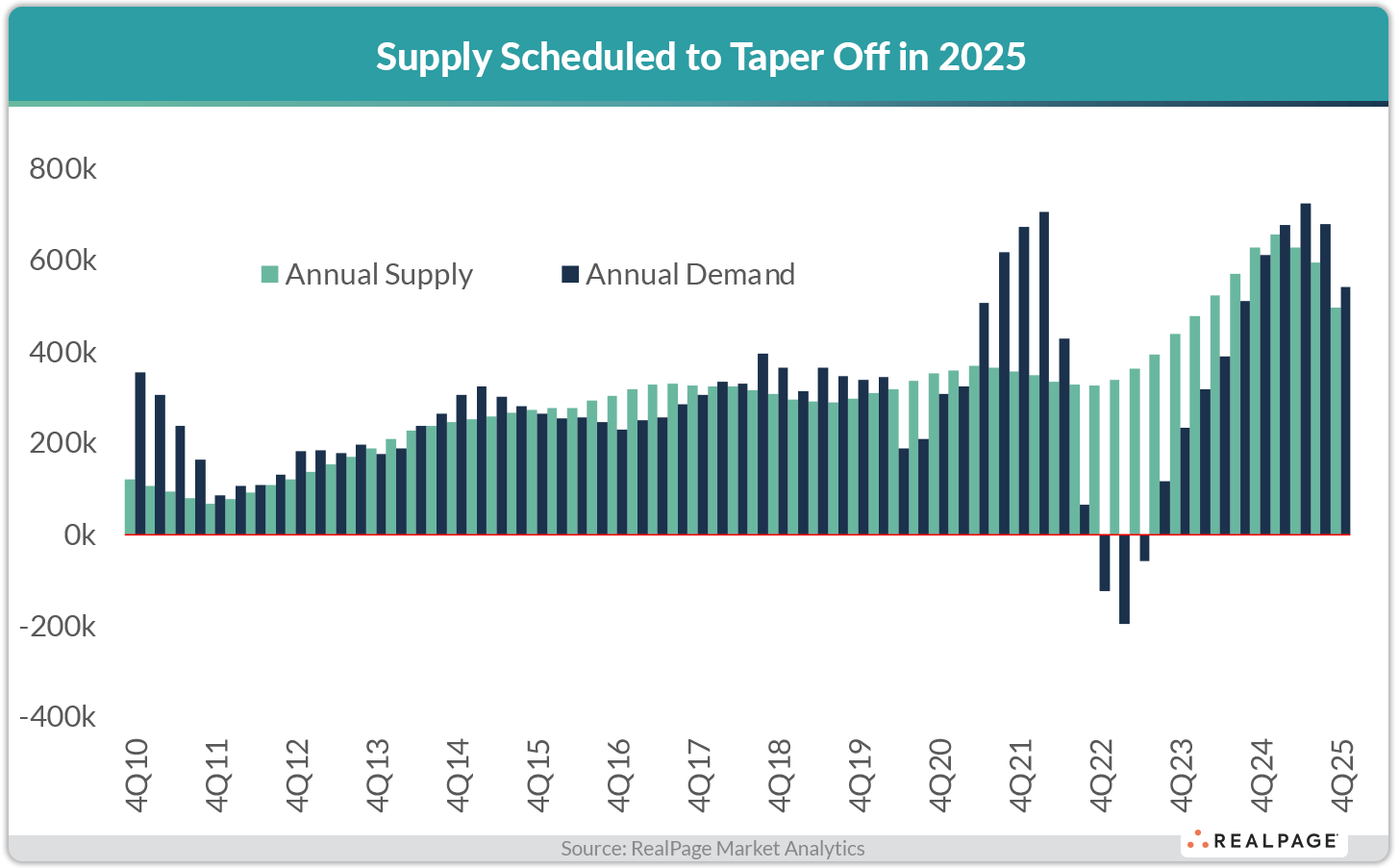
  3. July 15, 2024 – RealPage Forecast Points to Improved Rent Growth in 2025 – Another pressure point is the increase in supply, especially in Texas markets, making it tough to push rents, leading to temporary concessions. However, we believe these issues are temporary and that well-capitalized investors will benefit in the long run. We’ve talked about this quite a bit in the past, but again a lot of developers took advantage of the cheap money which ended in 2022 but you’re gonna have to wait 2 to 3 years for that inventory to work its way through the system so 2025 you’re gonna start to see that new supply drop off a cliff meaning if you’re able to be in the market at that point you’re gonna be catching a lot of positive trade winds to your back.
  4. July 16, 2024 – Multifamily distress nearly triples in 6 months – Finally seeing the fallout from 40-year high interest rates after people can’t hold on. Make no mistake that these assets (we now know in hindsight) we bought at too high basis price on 2020-2022.
  5. July 14, 2024 – RBC takes steps to seize 82 apartment buildings in SF after Goldman Sachs, Ballast default
  6. July 5, 2024 – U.S. Apartment Demand Surges in 2nd Quarter
  7. May 20, 2024 – A $10 Billion Real-Estate Fund Is Bleeding Cash and Running Out of Options
  8. April 29, 2024 – Family offices are looking beyond the stock market for higher returns, new report finds:Family offices have 46% of their total portfolio in alternative investments, according to the J.P. Morgan Private Bank Global Family Office Report.
  9. April 8, 2024 – Blackstone Making $10 Billion Multifamily Purchase, Going on the Real Estate Offensive
  10. March 28, 2024 – Fortune Favors Early Movers in America’s Property Crunch: Investors willing to buy buildings when everyone else is running scared typically get the biggest rewards
  11. March 4, 2024 – GVA’s ill-timed buying spree has syndicator on shaky ground: Alan Stalcup doubled portfolio to 30,000 residential units as interest rates spiked.
  12. Feb 8, 2024 – Janet Yellen says this one struggling sector could test the financial stability of US banks. Is it still safe to invest?
  13. Jan 25, 2024 – BlackRock: Now Is the Time to Invest in CRE
  14. Jan 11, 2024 – The hard part is over: Commercial real estate is experiencing a more dramatic dip now than in the infamous 2008 recession.

Other News – Updatd 24.08.10 

  1. 24.08.9 – Syndicator lender Ready Cap sells problem loans for cents on the dollar – Sale is a snapshot of the deteriorating multifamily market. Values of buildings bought during the frenzied market of late 2020 into early 2022 have plunged as interest rates rose and rent growth slowed.

    “I think the worst is certainly behind us on the multifamily side,” said Zausmer, who was less willing to make a call on whether delinquencies had peaked.

    24.08.3 – Arbor Realty Trust Reported $1B in Delinquencies Second Quarter – Arbor Realty Trust reported $1 billion in Q2 delinquencies, up 10% from Q1, with a significant slowdown in loan modifications. CEO Ivan Kaufman indicated foreclosure might be necessary for some of the delinquent properties. Rising interest rates and stalled renovations have strained multifamily borrowers. Kaufman remains cautiously optimistic about potential Federal Reserve rate cuts.

  2. Aug 1, 2024 – Surge in Commercial Property Foreclosures suggests a bottom – rise in foreclosures in the commercial property market, indicating that the market might be nearing its lowest point before a potential recovery
  3. July 15, 2024 – RealPage Forecast Points to Improved Rent Growth in 2025 – Another pressure point is the increase in supply, especially in Texas markets, making it tough to push rents, leading to temporary concessions. However, we believe these issues are temporary and that well-capitalized investors will benefit in the long run. We’ve talked about this quite a bit in the past, but again a lot of developers took advantage of the cheap money which ended in 2022 but you’re gonna have to wait 2 to 3 years for that inventory to work its way through the system so 2025 you’re gonna start to see that new supply drop off a cliff meaning if you’re able to be in the market at that point you’re gonna be catching a lot of positive trade winds to your back.
  4. July 16, 2024 – Multifamily distress nearly triples in 6 months – Finally seeing the fallout from 40-year high interest rates after people can’t hold on. Make no mistake that these assets (we now know in hindsight) we bought at too high basis price on 2020-2022.
  5. July 14, 2024 – RBC takes steps to seize 82 apartment buildings in SF after Goldman Sachs, Ballast default
  6. July 5, 2024 – U.S. Apartment Demand Surges in 2nd Quarter
  7. May 20, 2024 – A $10 Billion Real-Estate Fund Is Bleeding Cash and Running Out of Options
  8. April 29, 2024 – Family offices are looking beyond the stock market for higher returns, new report finds:Family offices have 46% of their total portfolio in alternative investments, according to the J.P. Morgan Private Bank Global Family Office Report.
  9. April 8, 2024 – Blackstone Making $10 Billion Multifamily Purchase, Going on the Real Estate Offensive
  10. March 28, 2024 – Fortune Favors Early Movers in America’s Property Crunch: Investors willing to buy buildings when everyone else is running scared typically get the biggest rewards
  11. March 4, 2024 – GVA’s ill-timed buying spree has syndicator on shaky ground: Alan Stalcup doubled portfolio to 30,000 residential units as interest rates spiked.
  12. Feb 8, 2024 – Janet Yellen says this one struggling sector could test the financial stability of US banks. Is it still safe to invest?
  13. Jan 25, 2024 – BlackRock: Now Is the Time to Invest in CRE
  14. Jan 11, 2024 – The hard part is over: Commercial real estate is experiencing a more dramatic dip now than in the infamous 2008 recession.

Last Updated 24.07.16 

  1. 24.08.3 – Arbor Realty Trust Reported $1B in Delinquencies Second Quarter – Arbor Realty Trust reported $1 billion in Q2 delinquencies, up 10% from Q1, with a significant slowdown in loan modifications. CEO Ivan Kaufman indicated foreclosure might be necessary for some of the delinquent properties. Rising interest rates and stalled renovations have strained multifamily borrowers. Kaufman remains cautiously optimistic about potential Federal Reserve rate cuts.
  2. Aug 1, 2024 – Surge in Commercial Property Foreclosures suggests a bottom – rise in foreclosures in the commercial property market, indicating that the market might be nearing its lowest point before a potential recovery
  3. July 15, 2024 – RealPage Forecast Points to Improved Rent Growth in 2025 – Another pressure point is the increase in supply, especially in Texas markets, making it tough to push rents, leading to temporary concessions. However, we believe these issues are temporary and that well-capitalized investors will benefit in the long run. We’ve talked about this quite a bit in the past, but again a lot of developers took advantage of the cheap money which ended in 2022 but you’re gonna have to wait 2 to 3 years for that inventory to work its way through the system so 2025 you’re gonna start to see that new supply drop off a cliff meaning if you’re able to be in the market at that point you’re gonna be catching a lot of positive trade winds to your back.
  4. July 16, 2024 – Multifamily distress nearly triples in 6 months – Finally seeing the fallout from 40-year high interest rates after people can’t hold on. Make no mistake that these assets (we now know in hindsight) we bought at too high basis price on 2020-2022.
  5. July 14, 2024 – RBC takes steps to seize 82 apartment buildings in SF after Goldman Sachs, Ballast default
  6. July 5, 2024 – U.S. Apartment Demand Surges in 2nd Quarter
  7. May 20, 2024 – A $10 Billion Real-Estate Fund Is Bleeding Cash and Running Out of Options
  8. April 29, 2024 – Family offices are looking beyond the stock market for higher returns, new report finds:Family offices have 46% of their total portfolio in alternative investments, according to the J.P. Morgan Private Bank Global Family Office Report.
  9. April 8, 2024 – Blackstone Making $10 Billion Multifamily Purchase, Going on the Real Estate Offensive
  10. March 28, 2024 – Fortune Favors Early Movers in America’s Property Crunch: Investors willing to buy buildings when everyone else is running scared typically get the biggest rewards
  11. March 4, 2024 – GVA’s ill-timed buying spree has syndicator on shaky ground: Alan Stalcup doubled portfolio to 30,000 residential units as interest rates spiked.
  12. Feb 8, 2024 – Janet Yellen says this one struggling sector could test the financial stability of US banks. Is it still safe to invest?
  13. Jan 25, 2024 – BlackRock: Now Is the Time to Invest in CRE
  14. Jan 11, 2024 – The hard part is over: Commercial real estate is experiencing a more dramatic dip now than in the infamous 2008 recession.

Is Multifamily Overbuilt?

No. The U.S. remains short 7-10 million market-rate units, and the multifamily pipeline is dwindling. Overall, residential real estate in America is significantly underbuilt. With homeownership being historically expensive, there’s a broad and durable demand for multifamily housing.

Yes, luxury apartments are overbuilt in certain markets, especially in the Sunbelt regions that saw a boom during the pandemic. These areas often have loose building regulations. However, borrowing from Tolstoy, all balanced multifamily markets are alike; each unbalanced market is unique, creating specific opportunities for investors. Everyone needs housing, and the U.S. is vast, with metro areas experiencing unique demographic trends and housing supply challenges. For more insights into specific multifamily markets and opportunities, refer to our recent Second Half ’24 Whitepaper.

Is Multifamily a Broader Concern for Lenders and the Financial System?

Probably not. Some lenders with loose underwriting practices and high exposure in specific markets might have concerns, but multifamily remains a strong asset class. Rent levels are unlikely to fall relative to debt service costs for long.

Higher interest rates pose challenges for multifamily lenders, including small and regional banks, leading to tightened lending standards. This doesn’t necessarily benefit Fannie Mae and Freddie Mac as much as it seems. According to Lonnie Hendry from Trepp, “If regional banks and large investment banks pull back from multifamily loans, Fannie and Freddie will simply get more of the business.” However, this is a misconception. Fannie and Freddie don’t issue loans; they buy and securitize existing ones, often including HUD or FHA loans guaranteed by the federal government. They can support some lenders and multifamily operators facing distress, but their charters limit their activity on loans above a certain amount.

Putting 1st Quarter 2024 Apartment Demand in Perspective

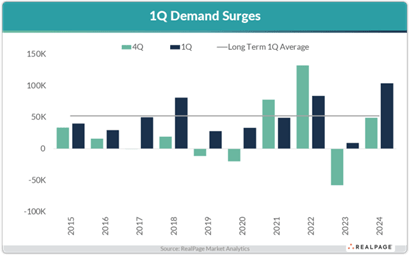
  • Absorption soared to over 103,800 units.
  • Previous quarter absorption was 49,000 units.
  • Contrast to subdued behavior during 2021-2023.
  • COVID-19 influenced low demand during that period.
  • Q1 usually accounts for only 4% of annual absorption.
  • 2024 Q1 demand doubled the decade’s average.
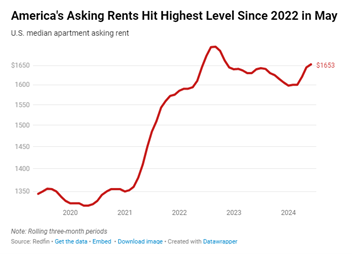
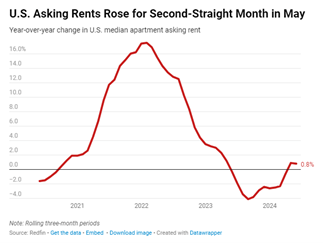
  • National median asking rent increased for the third month.
  • 135,652 new apartment units added in Q1 2024.
  • Highest annual apartment supply since 1986.
  • Q1 saw record-breaking 135,600 units completed.
  • Competitive pressures on rent and occupancy rates.
 
  • 390,000 units absorbed over past 12 months

    • Ranks as the eighth-largest annual figure since 2000.
    • Only outpaced by pandemic-era boom (mid-2021 to mid-2022), year-ending 3rd quarter 2018, and year-ending 4th quarter 2000.
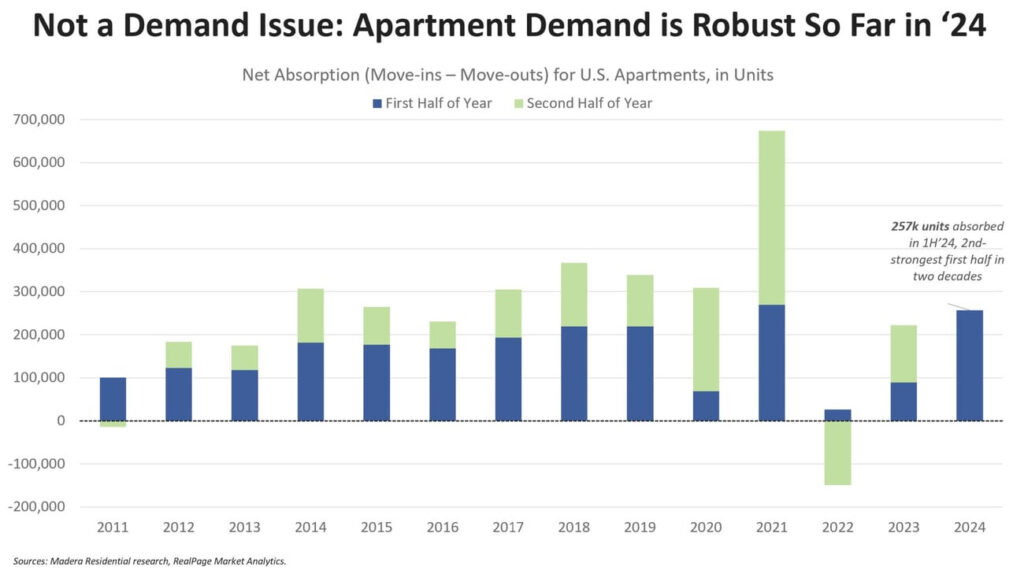
  • 257,000 units absorbed in first two quarters of 2024

    • Almost matches the all-time high set in the first half of 2021 during the pandemic-era demand swell.
  • Record supply continues to outpace demand

    • Over half a million new market-rate units delivered in the past 12 months.
    • Highest number of new units since 1986.
    • Additional 629,000 market-rate units expected in the next 12 months.
  • National occupancy and rent growth stabilize

    • Occupancy steady at 94.2% in June for three consecutive months.
    • Rent growth modest at 0.2% in the year-ending June 2024.

Early 2024 Storyline

We don’t want to name names of other colleagues in the industry but we know at least 4 (billion dollar assets owned firms) that are in the same predicament on the projects that were secured between 2021-2022 with floating rate debt. These firms we are citing are not in the headlines but also own significant portfolios that will inevitably flood the market. This is why we are taking a pessimistic approach to the market in the short term.

Additionally the Fed at the September meeting chose to pause rate hikes and will likely do one in November. Which only exacerbates how long those will need to hold on. There is a tidal wave of mortgages up for renewal ($436B) and we feel at this point it is best to get ahead of it before it craters that market even more.

For those who are unaware of floating rate debt, even with a rate cap in place you can expect your mortgage payments to increase 50% to well over 2-3X. This makes getting to cashflow neutrality impossible… even if you were over 110% occupied and pushed rents to 15-40% above prior levels in some instances. Simply put… NOI increases cannot overcome the monthly mortgages. The monthly payments just can’t be penciled out. Hence the need to “Rate Cap” placement to bring down mortgage rates to passable levels and this takes capital… and a lot of it (in the seven figures range). Or refinance into permanent debt – again a viable solution but requires even more investor capital in order to meet lower LTV requirements. It’s a conundrum facing all in the commercial RE sector.

Question on everyones mind “when will rates fall and at what speed” [which is very different from a year ago which was “how high will rates go up]


What now?

In the face of the recent upheavals in the commercial real estate sector, it’s easy to be swayed by the prevailing pessimism – example comment thread of fear monger blogs which tend to have low net worth readers not real investors. The rapid increases in interest rates, the subsequent drop in buyer activity, and the myriad challenges faced by the commercial real estate and multifamily sectors paint a daunting picture. The headlines of 2023 alone are a testament to the turbulence experienced by even the most established players in the industry. The current scenario underscores the importance of strategic financial planning, especially in terms of choosing between fixed and floating rate debts. While the repercussions of floating rate debts have been starkly evident, it also brings to light the importance of having a diversified portfolio that spans 4-7 years meaning that you might need to start now to establish that.

It’s crucial to remember that every challenge also presents an opportunity. The current market conditions, while testing, are also a litmus test that distinguishes the retail investors from the sophisticated ones. While the former may be swayed by the prevailing doom and gloom, the latter sees the potential for strategic capital placement.

The market’s short-term pessimism can be that “cover of night” for those with a long-term vision. With properties being undervalued and a flood of assets potentially hitting the market, there lies a golden opportunity for savvy investors to acquire assets at a discount. That said where current Loan to Values are at with loans I can’t make deals work (as of June 2022 we have not done much as far as new acquisitions) even with 20%+ discounts in the market. The key is to have the foresight to look beyond the immediate challenges and recognize the potential for future gains and this might mean focusing on building your AIB or opportunities to save tax.

Focus on the opportunities that such challenges present – this might even be outside of real estate or other hard asset classes. Remember, it’s the strategic placement of capital, especially in times of uncertainty, that separates the guy who is going to stay where they are at with 5% in a savings account than those quietly building the foundation to launch themself into 8-figures in the next decade. Don’t be swayed by short-term challenges. Instead, let’s seize the opportunities that lie ahead, for it’s in times like these that the most astute investments are made. As Warren Buffett says, “be greedy only when others are fearful!”

Drivers Behind the 2024 Recession
https://www.youtube.com/watch?v=yySJGqsIKUg

  1. A mild recession in 2024 expected
  2. Personal savings declined to 2020 (still above 2019 levels)
  3. Capex / Exports (4 months lead time)
  4. Capex / Corp Bond yields (22 mo lead time) show weakening in 2024 and over
  5. Capex / Corporate profits (9 months lead time to Capex) is lowering

2023 Early Warnings

The Fed’s goal is to use their only lever to increase high interest rates lower inflation and achieve a soft landing recession. This negatively impacts the banking sector but selfishly how does it impact us real estate investors?

For fixed rate debt deals that are stabilized, the current conditions are all but a minor inconvenience that you are just going to have to wait at least a year or two to sell or refinance – due to buyers not in the marketplace causing lower evaluations now (see above). Read on with very little to fear for your projects that have secured fixed rate financing.

For projects with floating rate debt, the impact is that of a nuclear bomb.

These explosions started to go off in early 2023 with the most known institutional players:

July 24, 2024 – Syndicators Scramble in Real Estate’s Version of “Survivor”

Dec 6, 2023 – Syndicators Scramble in Real Estate’s Version of “Survivor”

Nov 28, 2023 – Rise48 Disputes Data Showing Trouble in Multifamily Portfolio

Nov 11, 2023 – Multifamily Firm Ashcroft Pauses Payouts, Citing Rate Caps

Sep 1, 2023 – Multifamily distress: MF1 to foreclose on Rockstar Capital complex
Syndicator in default on $51M loan

Sep 18, 2023 – Tides touts loan workouts across bulk of portfolio
Troubled multifamily syndicator reports extensions, rate relief on dozens of deals [I’ve actually heard the opposite of this from my sources so again you can’t really trust what the media puts out there. Given the loan modifications, it’s conceivable that numerous potential sales could averted as the banks “extend (the loan) and pretend (it will all go away)” or merely a temporary fix… that said interest rates should be going back down surely by 2025]

Sep 19, 2023 – Houston Apartment Complex Faces Foreclosure, Lawsuits And Liens

Sep 22, 2023 – Michigan investor’s Houston apartments head to foreclosure auction

Sep 27, 2023 – Preferred Equity Is Pouring Into Multifamily

Aug 17, 2023 – Foreclosure Threatens Three Dallas-Area Office Buildings

July 6, 2023 – Tides Equities flew too close to the sun. It wasn’t alone


July 6, 2023 – Multifamily syndicators GVA, Rise 48, ZMR and Nitya face a reckoning

July 15, 2023 – Multifamily real estate continues to take a beating this summer

July 15, 2023 – Rise48 Equity, Tides Equities, Related Companies are sweating it out

Apr 28, 2023 – Wolfe Investments Plans Office-to-Resi for Classic Dallas Building

2021-2023

Commercial real estate has seen a big impact from the unprecedented increases in interest rates. Certainly a “black swan event” – see this graph comparing to other hawkish rate increases.

This has impacted commercial real estate as follows:

  1. Buyer activity dropped. Of the 2021 peak, pricing across the country came down 15-50% (UPDATED 24.04.23) across the board, more in hotter markets such as Las Vegas, Boise, Austin, Phoenix, Atlanta, select parts of Florida. No market is immune to these forces.
  2. Buyers face slightly higher rates however the bigger impact came from much lower Loan-to-values that banks were giving. At one time 70% now 50-55% meaning even with a 25% discount on properties a buyer would still need to bring more to the table at closing. There is a tidal wave of debt coming for renewal.
Independently there were also the following Commercial Real Estate/ Multifamily headwinds:
  1. Expenses increased – remember the double digit inflation (see visual example).
  2. Insurance 2-3X – due to unprecedented natural disaster patterns
  3. Taxes 2-3X – due to aggressive municipalities harvesting revenue
  4. Slight softness of rents and lower occupancy due to 2021 pricing run up – article 2 – article 3
    1. Surge in apartment construction affecting Class B market
    2. No new supply submarkets saw Class B perform well

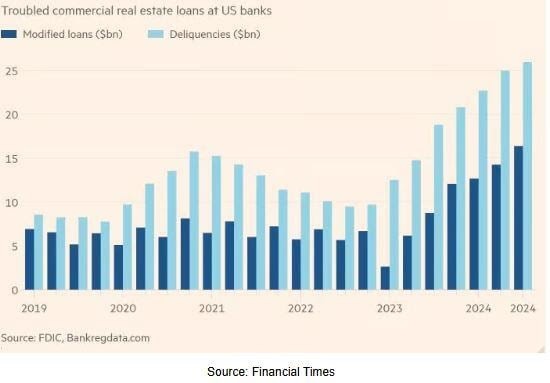
Elevated interest rates has lasted far longer than anyone anticipated. As noted in reports from April 2024 (showing recovery) and October 2023 (show, the financial situation in the housing sector has experienced a recession, particularly pronounced in its lowest points. This has significantly impacted commercial real estate, in contrast to residential real estate, which was more affected during the 2008 global financial crisis. Additionally, this image highlights considerable distress in the banking sector.

See how we are progressing through this market cycle.

Good news (April 2024):

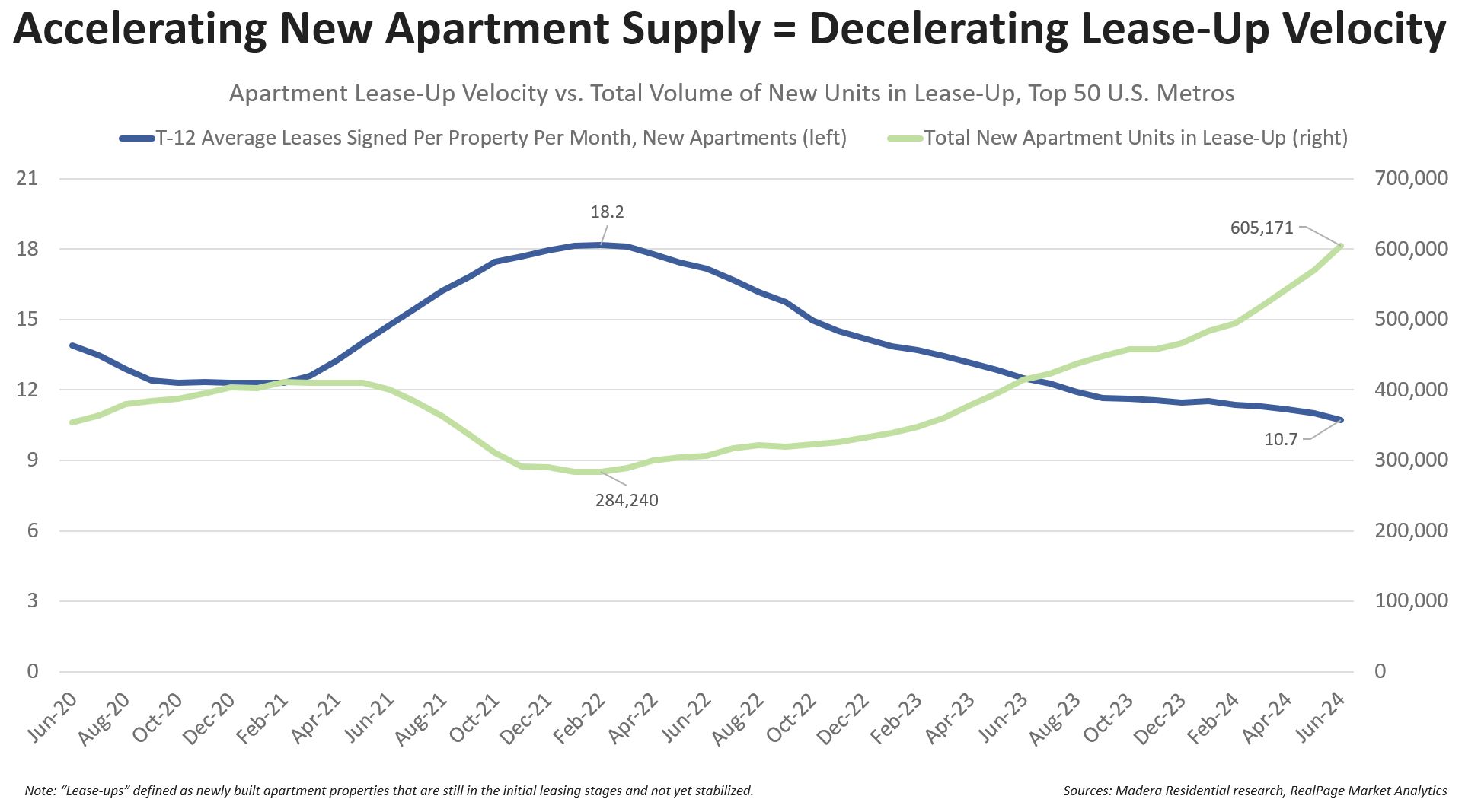
We are starting to see deceleration of apartment new supply from the 2020-2023 build phase.

We’ve observed a 15 to 50% price drop across the country, positioning us at an ideal point in the market cycle to secure properties at an amazingly low cost basis. Blackstone has entered the market!

Commercial real estate is experiencing a more dramatic dip now than in the infamous 2008 recession. Source

Our Long-term investment horizon

Focus on meeting the essential needs of the general public  that are expected to become increasingly important in the future and are resistant to recessions and industry disruptions or technology advancements. This includes addressing real estate demands driven by population growth, as well as exploring solutions outside traditional asset classes to cater to broader human necessities.

Our Investment philosophy!

  • Seek emerging markets: diversify holdings in the best growing markets with population and economic growth. We don’t count on appreciation to happen but when it happens it’s the icing on top of the cake.
  • Emphasis on purchase price and buying from sellers with non-economic reasons for selling (estate sales, partnership dissolutions, or strategic divestitures): we don’t buy distressed assets (properties under 70% occupancy) but from sellers who are motivated to lower their pricing due to their overall situation.
  • Focus on controllable factors: Value creation through forced appreciation by driving NOI, reducing expenses, increasing occupancy, and upgrading assets.
  • People: We prioritize collaboration with individuals and entities that uphold the highest ethical standards and moral integrity, ensuring that all our stakeholders—be it our customers (tenants), contractors, staff, or investors—are treated with the utmost respect and fairness

Interest rates in above. Market cycles go up and down every 7-10 years. 2009-2023 cycle was a very long bull run. Now is the time when the professionals get in and make great returns.

About the author

Lane Kawaoka, PE, is the founder of The Wealth Elevator and the author of two Amazon bestselling books, The Wealth Elevator and Simple Passive Cashflow. He spent 12 years as an engineer, bought his first rental in 2009, and left his job in 2019. He built his base in real estate and today is a general partner, operator and fund manager working with a community of accredited investors across real estate, oil and gas, and private companies. His track record: $2.1B of past real estate acquisitions, 10,000+ units acquired, 65+ projects, and $230M+ raised.

This site is free education for accredited investors and high-income professionals whose net worth sits mostly in stocks, a 401(k) and a salary. Start with the guides, the podcast or an event.

This is educational content, not tax, legal, or investment advice. We are not attorneys, CPAs, or financial planners. Please let us know if you need a referral to a CPA, lawyer, or other vendor here.