

Remote Rental eCourse

Vetting a Rental Property Provider
Start finding your deal here
Pick 2-3 potential real estate markets and find a good rental property provider, like a turnkey company or broker, to work with.
Put emphasis on the rental provider referrals from other unbiased sources. There are many fly-by-night turnkey operators out there on popular internet forums where people pay to get mentioned/sponsor.

Over the last few years, the entire turnkey industry got a bad rap because of a few dishonest, shady turnkey companies.
Ultimately, they want to buy houses at the cheapest prices, spend as little as possible on the rehab, and sell them for as much as possible so they can maximize their profits and move on to the next rental unit.
I am in an invite-only Mastermind called the Collective Genius ($25K a year membership fee) with the top 1-2 operators from each major MSA in America. The caliber of guys in the group is top notch, and basically you can’t get in unless you flip 100+ properties a year… I know, I know, how did they let me in!
Anyway, we talk a lot about how in the process of becoming a flipper/developer, becoming a turnkey rental property owner is a starting point to start building a business because the scope is less and overlays of cash are less as opposed to higher-end flips. Most of these guys will transition from lower-level properties (let’s face it, turnkeys are lower-level rehabs) and go to bigger housing projects. So that is the reason for the turnover in the space.
That said, I try to find operators where turnkey products are just one piece of their business. They mainly have a wide band of dealflow (50k-500k+ properties), and they have systems in place to take whatever the opportunity comes and process it to a turnkey buyer like us on smaller projects in lower-end communities or larger housing projects that go to the retail market.
Your turnkey rental property is not going to be in the most desirable locations. If that is being sold to you… run!
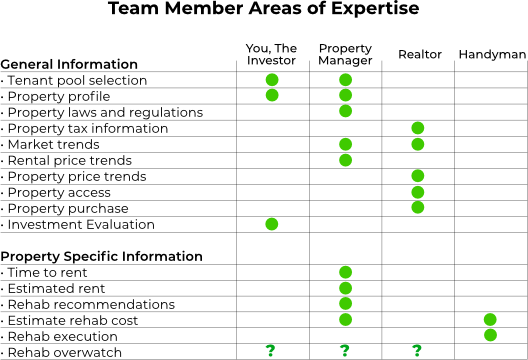
Start finding your deal here
Avoid a housing provider that is not realistic with their pro forma (i.e., they don’t include vacancy or property maintenance projections). Here are some of the most common ways brokers/turnkey sellers inflate cash flow projections:

1. Vacancy Percentage Too Low: Vacancy rates are advertised at around 5%, even in C-class neighborhoods. Don’t take the listed rate as-is; do your own research and use the footnotes we have in our property analyzer. Common advice out there says to contact 2-3 property managers or a property management company and ask them how long it takes to conduct a tenant screening and find a prospective tenant for similar properties in the same area, but obviously, you are going to get bad data because they are trying to sell their services. It is still worth the exercise and worth having that open dialogue discussion. Here are some other top questions to ask your property manager (note: don’t be a bonehead and ask this in a sterile interview environment… just use these questions as a conversation starter. Remember, build your relationship first!). You can also get an indication from rental listings on Hotpads, Facebook Marketplace, Craigslist, Zillow, or Trulia to see how long they have been up.
I personally use at least a 10% vacancy rate for most of the turnkeys I look at. I use 15% for properties located in B- or C neighborhoods. A bit on the conservative side? Sure. But I’m not going to be surprised when it takes 4 weeks to find a new prospective renter. Another way of looking at it is that most tenants stay on average 1-2 years… some will be there 5 months, and the ideal tenant will be there 2-3 years.
2. Omitting Vacancy in the First Year: Many turnkey providers will use a 0% vacancy rate for the first year’s cash flow projections. The rationale is that if a property is already rented out, the current tenant “should” stay there for at least a year, so you will have no vacancies. Better to not run your numbers with this “rolling start” assumption. You know what happens when you assume!
3. Inadequate Maintenance and Cap Ex Allotments: The turnkey company will argue that they have fixed many of the minor property maintenance expenses and have taken care of much of the capital expenditures that will happen in the first 3-5 years. This is just not going to happen… if it does, consider yourself lucky.
We separate maintenance and cap ex projections. As a general rule, assume 1 month’s rent is going to fixing up random stuff around the house. And you can calculate the Capital Expenditures here and come up with an annual estimate. For older homes that are older than 1960 or have Section 8 tenants, you might want to bump that up to 15%. Again, use the footnotes on our Analyzer.
4. Using A Past Year’s Property Tax Numbers: Turnkey providers list last year’s property tax values… the one based on the appraised value before the value-add rehab occurred.
Property taxes are based on the county’s assessed value of the property, and in most states, that value will be equal to or close to the last sales price. When you buy the home, you’re always going to pay more than what the turnkey company paid for it, so its assessed value and property taxes will go up.
In some areas, like Texas, for our apartment buildings, we often double the property tax to account for this. You might be able to purchase the LLC (entity) that owns the property so the taxing authority does not trigger a reappraisal event; however, that loophole does not always work as appreciating areas are getting more and more aggressive to extract revenue via property taxes.
This is all just a part of the game, so we as investors have to run the numbers. In the analyzer, there is a general footnote on what to use, but once you are serious about a property, spend the 10 minutes to better estimate the taxes. Here is how you calculate property tax:
- Find the county’s property tax records online (they are all accessible to the public).
- Look at the previous 2-3 tax bills and figure out what percentage of the home’s assessed value is due as taxes each year. Some of these calculations can be rather complicated to follow.
- Use the percentage and your purchase price to calculate the new tax, removing any exemptions in the process.
5. Inflated Yearly Rental Income Increase: Rent tends to go up in most cities across the US due to economic growth and inflation. But this increase is not guaranteed. Turnkey sellers write in a 3% or 5% rental income increase in all of their cash flow projections. Just because they provide a very pretty PDF report with a bunch of numbers, don’t get excited… It’s really easy to make those reports. An astute investor looks at the assumptions, and in this case, what the annual rent escalator is.
A good annual rent escalator is 1-3%, depending on the area and the property. On our large apartment syndication, we try not to assume anything is higher than 2%. We feel we are being conservative since many people believe pure inflation is at 3% however, don’t believe all the data you see from the government.

If you recall from the great American classic “Aladdin,” at some point, you have to trust!
Direct Turnkey Sellers vs. Marketing Agencies
As you start looking at turnkey providers in your target markets, you’ll come across two types of companies and it’s important to understand the difference between the two.

Direct Turnkey Sellers
These are the guys who actually buy, rehab, and sell homes. They are almost always local to their city. They will be able to answer all of your questions directly, provide first-hand market insight, and in many cases manage the property for you.
Ways to tell if a company is a direct turnkey provider:
- Read the “about” section on their website.
- They typically list properties from just a single city
- Contact them directly to verify that they do the purchases and rehabs themselves.
Turnkey Marketing Agencies
Turnkey marketing agencies call themselves “turnkey companies”, but they are not.
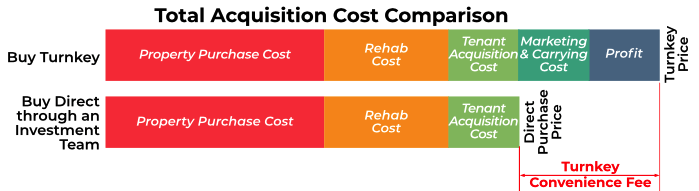
They do not own any properties, and are hired by direct turnkey sellers to advertise their properties, which can be a bad thing because the turnkey provider does not have a track record. I have seen the same properties marked up 5-10k to pay the turnkey marketer, so you are paying more.
The benefits of these agencies are:
- Large networks – they can refer you to a variety of real estate professionals in different cities
- Convenient – you can look at properties from several markets at once
- Resourceful – they can help narrow down your market selection by speaking with their representatives

Vetting a Provider
Building your network in our incubator is critical to co-sourcing due diligence on the buy and in the future, as problems arise. Those in our incubator won’t need to go the marketer route since you will likely use our rolodex or brokers, property managers, and turnkey rehabbers.
The most important factors to focus on when interviewing prospective turnkey companies:
● Communication: You should have no problems getting quick responses to your emails and phone calls. Avoid companies that are not transparent or are not willing to answer your questions. A good response time on legitimate emergencies is 1-2 days by phone or 2-4 days by email.
● Quality of Rehab (or Construction): Pretty much all turnkey companies will perform cosmetic repairs. The really good ones will also look for and correct plumbing, electrical, structural, and foundation problems. You can get a sense for this by reviewing several “scope of work” documents for their latest rehabs or by visiting the rehabbed properties in person. The only way to verify this is to have a 3rd party inspection.
● Years in Business: I tend to avoid newer companies that have been in business for less than 5 years, as that doesn’t give me the opportunity to look at their long-term track record. And I don’t work with anyone unless someone I trust and have a relationship with vouches for the operator.
● Availability of Properties: 1-2 rehabs a month is not enough and a sign of bad systems.
● Maintenance Warranties: Some turnkey companies may offer 6-month or 1-year maintenance warranties on their properties, covering any maintenance and repair expenses for that period. Ask the turnkey company if they do warranties, but beware if they are just going to buy you a Home Warranty program that is third party, it is just not the same as backing the product as a company.
● Rent Guarantees: Some turnkey sellers will provide a “rent guarantee” – in other words, they will pay you the monthly rent amount for a certain time (usually 6 months or 1 year), even if the rental unit is vacant. I’m not a big fan of this program, as it is often offered on properties in very bad neighborhoods, which are difficult to rent out and find reliable tenants.
● Tenant Placement Before Purchase: Not all turnkey companies place tenants in their properties before selling them to you. I think it’s better if they do, as that enables you to start collecting rent immediately after purchase… if anyone has been a parent to step-children or can imagine… It’s just not the same as laying down the LAW from the start. Tenants are like kids; they know how to test the new property manager. And this way your property manager does not have the excuse they it was not their fault for placing a subpar tenant.
● In-House Property Management: I have mixed feelings about an in-house property management company, as I feel that it gives them an incentive to do better with me, since they will be dealing with me as a client after the purchase. But the property management side of the house can hide bad rehab work. I like to build as many relationships for a longer-term horizon, so by building a relationship with a third-party property manager, you are able to go to them for critical feedback when you are going back to XYZ turnkey company or perhaps getting your own broker and building off the MLS.
● Investor References: Speaking with other rental property owners who have bought from a turnkey company you’re considering is essential. This will give you first-hand feedback about all of the other criteria above.
NOTE: We put emphasis on referrals from other passive investors first. Every turnkey provider, good or bad, can do a good interview

Finding Turnkey Sellers
You can quickly find turnkey sellers in almost any city via an online search (ex, “turnkey properties in Dallas, TX”). Alternatively, you can search for them on the BiggerPockets website. But again, be careful with that.

Progressing forward!

This content is provided for informational and educational purposes only and does not constitute an offer to sell or a solicitation to buy any security or investment product. All investors must review and sign the official offering documents, including the Private Placement Memorandum (PPM), which governs and supersedes any prior communication. Tax and legal outcomes vary by individual circumstance. We do not provide tax, legal, or accounting advice—investors should consult qualified professionals before making investment decisions. Click Here to see full disclaimer.