While each turnkey rental you purchase may only generate a few hundred dollars a month after all the expenses are paid, this quickly adds up if you continue to buy properties. Once you have ten properties ($300/cashflow a month each), it will seem like an additional paycheck per month… without much effort.
There are two things that often limit the growth of real estate portfolios: a lack of cash and the inability to get additional financing.
Below are some of the strategies you can use to ensure your real estate portfolio continues to grow:
Use Other People’s Money
This strategy ranges from:
Borrowing money from your friends or family
Partnering with other investors
Attracting large groups of investors and investing as a syndicate.
Most of our Tribe realizes that their highest and best use of their time is to go back to their six-figure day job. But they go in with a lighter mind, knowing they will be retiring in 5-10 years.
Use Alternative Financing Strategies
In addition to being limited by your ability to save cash for down payments, you may find yourself limited by the restrictions of conventional financing.
Most lenders will not give you more than 10 conventional loans and will also stop lending to you if your debt-to-income ratio exceeds 50%. Here are some alternative financing strategies you can use to overcome these limitations as you continue growing your portfolio:
Split Financing with Spouse
If you’re married and both you and your spouse work, consider purchasing properties in your own individual names instead of jointly. This will effectively double your conventional loan limit to 20 properties.
Portfolio Lenders
Portfolio lenders have a higher interest rate than conventional loans, but have fewer restrictions and will typically allow you to finance more than 10 properties, finance multiple properties under a single loan, and exceed the 50% debt-to-income ratio.
Commercial Loans
Similar to portfolio loans, commercial loans can allow you to finance entire portfolios of properties under a single loan. Although their terms are more complex and interest rates are higher.
As you continue buying additional rental properties and learning more about real estate investing in general, you will be able to judge which growth strategies will work better for you.
Buy, Save, Repeat
The simplest strategy is to buy one rental property, save up for the down payment for the next one, buy the next property, and repeat the process all over again. Most investors in our Tribe are about to save $30,000 a year, which means they can buy one rental property a year.
Case Study – Buying 20 Rentals in 10 Years
Let’s look at an example of how a middle-class, full-time working individual’s real estate portfolio can grow in just 10 years using the buy, save, and repeat strategy!
Meet Kevin, he’s 29, married, and makes $70,000 at his full-time job. Kevin has $20,000 in savings and is able to save 20% of his salary (about $14,000).
(NOTE: This example is a simplification; it doesn’t include an increase in salary, income taxes, and closing costs)
Note: This is just a sample progression. In reality, depending on where your net worth is, you might think about going down the passive investor syndication route in years 3-5. See my transition here.
Part 8 of 8 – New investor case study & questions
Apprehensions
Barriers and mitigation strategies
Why do you need a mentor
Investor questions
General investing strategy progression to Accredited status
Note, this is coming from an Accredited investor’s POV who used to do turnkey rentals.
I personally would not do Remote BRRR as there is just a lot of risk with 1) risk of embezzlement with contractors, 2) change orders, and 3) the bank doing a bait and switch, doing a lower appraisal and/or LTV on the refinance.
This is especially true for high-paid professionals or those with a net worth of over $300,000. Yes, you might be very educated and competent, but you may not be experienced with construction contracts to be able to handle these hot messes with an unproven rehabber.
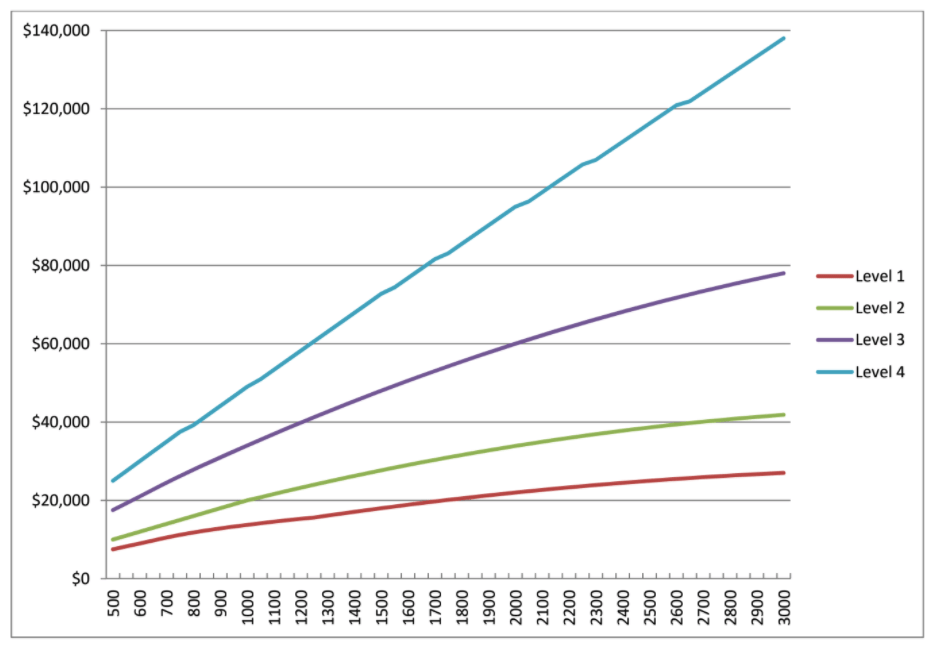
Level 1 – “Lipstick” will be just paint and flooring, maybe freshening up landscaping. Changing out some light fixtures and mirrors. Minimal work can be done in a week or two.
Level 2 – Cosmetic Update – in addition to Level 1, one or two additional expensive updates/repairs will be required, such as window replacement, roof, HVAC replacement, kitchen cabinets, and bathrooms. No structural moving of walls or plumbing/electrical components. This would be a 3‐4 week rehab
Level 3 – Moderate Updates/Repairs – Kitchen and bathrooms require updating. Two to three expensive updates/repairs will be required. Some plumbing and electrical work may be required. May include removing one wall and installing a glued laminated beam to open up the floor plan. This is the most common rehab level for older homes. Rehab would last 6‐8 weeks
Level 4 – Full Updates/Repairs – The entire home requires updating. Some moving of walls, removal of walls. Some rewiring and re-plumbing required. Replacement of mechanicals. May include items such as moving laundry rooms, reconfiguring kitchens, and adding light circuits. Potential structural/crawlspace issues. 8+ weeks to complete the work.
Level 5 – Full Gut and/or Addition– House will be gutted to the studs and rebuilt with or without addition. All trades will require major scopes. Should be estimated case by case – not included.
Next Steps
From our example, Kevin can either:
Retire with $63,000 annual passive income, in 20 years, when he pays off the mortgage, the cash flow will increase!
Continue to work at his full-time job and pay off his loans now, which will delay retirement, but increase his income quicker.
Continue investing in real estate and earn more passive cash flow each month!
Just a reminder that this is a simplification; however, it is definitely possible to build a large stream of passive income in just 10 years of diligent investing.
The Importance of Taking Action
This course went over all of the important concepts and steps you need to understand to buy your first turnkey.
From picking a good market and finding financing, to analyzing cash flow, managing your rentals, and more.
It’s almost impossible to know everything, but don’t let this deter you from taking action! You will learn things along your journey. I encourage you to keep networking and growing your portfolio!
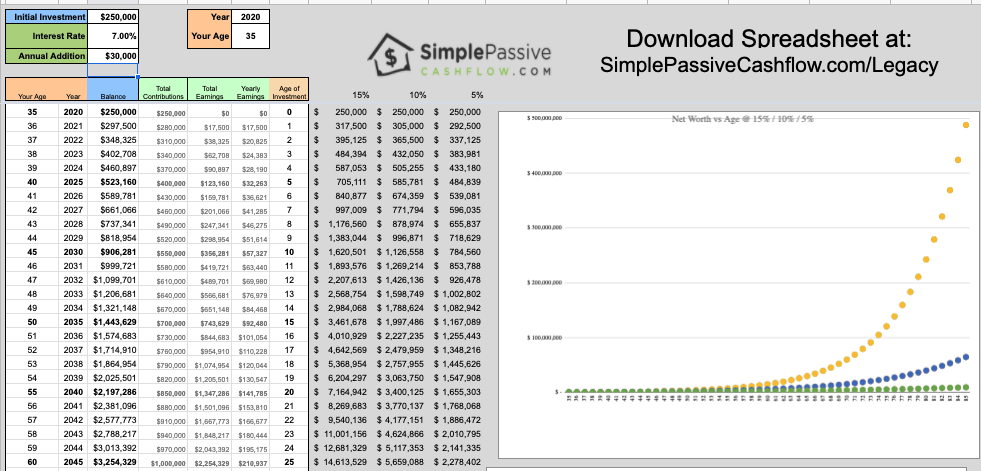
Here is a breakdown of returns that are possible in real estate investing.
Numbers don’t lie… compare 12-15% returns with 7-8% in mutual funds/401K!
FAQ’s
I still feel like I need to learn more about investing before I get started. Any tips?
If you’ve followed along with this course, you’ve been given the most important fundamentals to know about getting your first rental.
Reading books, taking courses, and watching videos give you content and context, but they don’t give you experience. Experience comes with taking action, making a few mistakes, learning from those mistakes, and taking more action.
This content is provided for informational and educational purposes only and does not constitute an offer to sell or a solicitation to buy any security or investment product. All investors must review and sign the official offering documents, including the Private Placement Memorandum (PPM), which governs and supersedes any prior communication. Tax and legal outcomes vary by individual circumstance. We do not provide tax, legal, or accounting advice—investors should consult qualified professionals before making investment decisions. Click Here to see full disclaimer.